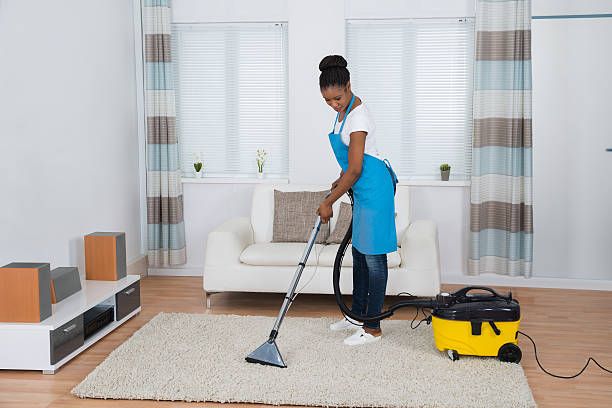
Cleanliness is the single lowest-cost, highest-impact intervention available to any property seller or landlord. It requires no structural work, no specialist trades, no planning, and no significant lead time. Yet it is consistently underestimated — treated as routine housekeeping rather than as the strategic presentation tool it is. The difference between a property presented in a dirty state and the same property presented after a professional pre-sale deep clean is not cosmetic. It is fundamental to how buyers form their first impression, how generously they interpret everything they see during the viewing, and how confidently they commit to an offer.
This guide examines property cleanliness as a professional pre-sale and rental preparation strategy: the psychology of how cleanliness affects buyer behaviour, what a genuine pre-sale deep clean involves room by room, the specific areas that buyers notice most acutely and why, how cleanliness supports and amplifies every other improvement you have made, the ongoing cleaning discipline required between viewings, and how our professional cleaning service fits within the broader pre-sale preparation programme we offer.
The Psychology of Cleanliness in Property Viewings
Buyers do not assess a property rationally, in sequence, weighing each feature against a checklist. They form an overall impression within the first sixty seconds of entering — and that impression, positive or negative, shapes every subsequent judgment they make during the rest of the viewing. A property that smells clean, looks clean, and presents with surfaces that are free of visible grime and clutter communicates one dominant message: this is a property that has been cared for. A buyer who receives that message approaches everything they see generously. Minor cosmetic imperfections are interpreted as minor. Questions about condition do not arise because the presentation communicates maintenance.
A property presented in a dirty state communicates the opposite message with equal force. The buyer who enters a home and encounters bathroom mould, kitchen grease, or stained floors immediately questions what else has not been maintained. Every subsequent thing they see is interpreted through the lens of that initial doubt. The layout feels worse. The room sizes feel smaller. The finishes feel lower quality. The condition questions multiply. None of this is rational — but all of it is real, and all of it affects the offer level, the speed of decision, and whether a viewing converts to a serious buyer at all.
The three signals that cleanliness sends to a buyer — that the property has been respected, that it is genuinely ready for occupancy, and that the seller is serious and professional — each work in the seller’s favour during negotiation. A buyer who is confident about the property’s condition is a buyer who does not use condition as a negotiating lever. Removing the condition uncertainty through thorough presentation removes one of the most commonly used justifications for a below-asking-price offer.
Why Standard Household Cleaning Is Not Enough
Standard household cleaning maintains a habitable standard of cleanliness. It removes surface dust and debris, wipes down visible surfaces, and keeps bathrooms and kitchens functionally clean. What it does not do is remove the accumulated grime that has built up in the places that regular cleaning does not reach: inside grout lines, behind appliances, inside cupboards, on ceiling corners, inside shower enclosures, around toilet base fixings, on window frames, and on door handles and light switches.
A property that has been maintained to a standard household cleaning level looks clean to its occupants, who have habituated to its current state. It does not look clean to a buyer who is encountering it for the first time with fresh eyes. The buyer sees the grout that has accumulated mould over years. They see the limescale on the shower screen that the occupant no longer notices. They see the kitchen cabinet interiors, the window track grime, and the skirting board dust. They form an assessment of the property’s maintenance standard based on what they observe — and standard household cleaning leaves a great deal observable.
Pre-sale deep cleaning targets all of these accumulated deposits systematically. It requires professional equipment — steam cleaners, tile scrubbing machines, specialist cleaning agents for limescale, mould, grease, and oxidation — and a methodical approach that works through every surface, every junction, and every recess in the property from top to bottom. The result is a presentation standard that is qualitatively different from standard household cleaning, and that a buyer encounters and responds to accordingly.
The Areas Buyers Notice Most Acutely
Not all surfaces in a property receive equal buyer attention during a viewing. Understanding which areas buyers focus on most acutely allows the cleaning effort to be directed where it has the greatest impact on buyer perception.
Bathrooms
The bathroom receives more concentrated buyer scrutiny than any other room. Buyers check the toilet, the shower, the basin, the mirror, and the floor in a systematic way that they do not apply to other rooms — because bathrooms are the room most associated with hygiene, and hygiene is the dimension of cleanliness that generates the strongest emotional responses. The specific findings that generate the most negative buyer reactions are: visible mould on grout lines or on caulk around the bath or shower enclosure; limescale deposits on shower fittings, shower screens, or basin taps; toilet bowl staining; and a persistent odour of mildew or stale water. Any of these findings triggers a strong negative emotional response that is disproportionate to the objective significance of the issue — and that response colours the entire subsequent viewing.
Bathroom deep cleaning involves: machine or hand scrubbing of all grout lines with specialist biocide cleaning agents to remove microbiological contamination at the root level; descaling of all chrome fittings, shower screens, and basin surfaces with appropriate acid-based or chelating descalers; toilet bowl and cistern deep cleaning including around the base fixing and behind the cistern; mirror and glass polishing; ceiling and wall corner mould treatment; and ventilation fan cleaning to remove the accumulated dust and grease that reduces airflow and contributes to ongoing humidity and mould problems.
Kitchen
The kitchen is the second area that receives concentrated buyer attention, because it is the room most associated with daily family life and the room where accumulated grime is most visible and most olfactorily apparent. The specific kitchen areas that buyers notice most acutely are: the hob and cooker hood (grease accumulation is immediately visible and produces a persistent odour that is very difficult to disguise); the inside surfaces of kitchen cabinets (buyers open cabinets during viewings and the interior condition is a direct indicator of how the kitchen has been maintained); the sink and drainage (staining and odour from the drain are immediately apparent at close range); and the floor, particularly in the corners and under kickboards where grease and debris accumulate.
Kitchen deep cleaning involves: full degreasing of the hob, oven interior, cooker hood filters and surfaces, and all splash-back surfaces; cleaning inside and outside of all cabinets including hinge mechanisms; descaling of the sink and tap; drain cleaning and odour treatment; degreasing of floor tile grout; and cleaning of the refrigerator interior if it is included in the sale. Where an older oven or cooker hood is beyond the point where cleaning produces an acceptable result, replacement — at $200–$600 for a quality replacement hob and $150–$400 for a replacement hood — may be a better investment than repeated deep cleaning attempts.
Floors Throughout
Flooring is the largest surface in the property and one of the first things buyers see in every room. Floors that are deep cleaned — with machine scrubbing of tile grout lines, buffing of polished tile surfaces, and thorough mopping of all areas including corners and under furniture — look noticeably brighter and closer to new than floors that have been surface-mopped. The brightness improvement from a professional tile deep clean is often striking — grout lines that have darkened over years of accumulated surface soiling return to a significantly lighter tone after machine cleaning. This improvement in floor presentation reinforces the quality of any flooring investment that has been made and maximises the visual impact of a well-chosen tile specification. For the full guide on flooring quality and its impact on buyer perception, see our post on how new flooring boosts property value.
Windows and Glass
Windows have a disproportionate effect on buyer perception because they determine how much natural light enters a room — and natural light is one of the most consistently valued features in residential properties across all markets. A window covered in dust, smear marks, and rain spotting allows significantly less light transmission than a clean one. The rooms behind dirty windows feel darker, smaller, and less inviting than the same rooms with clean glass. Professional window cleaning inside and out, including the window frames, tracks, and sills, is one of the most impactful and least expensive elements of a pre-sale deep clean. The transformation in natural light quality that clean windows produce is immediately apparent to buyers entering a room and creates a physically more pleasant viewing experience throughout the property.
Walls, Ceilings, and High Surfaces
Buyers look up. Ceiling corners, the areas above door frames, and the tops of fitted furniture are the locations where cobwebs and dust accumulation are most visible when a buyer looks upward. These are also the areas that standard household cleaning reaches least reliably. Ceiling mould in bathrooms and kitchens — caused by condensation in inadequately ventilated spaces — is a specific finding that buyers interpret as a ventilation problem and potentially as a structural moisture issue. Professional cleaning addresses all high surfaces methodically and applies mould treatment to any ceiling areas where biological growth has occurred.
Touch Points: Door Handles, Light Switches, and Skirting Boards
Door handles and light switches accumulate a type of grime that is specific to touch surfaces — skin oils and atmospheric dirt that build up in a thin, difficult-to-remove layer that makes chrome and plastic surfaces look perpetually grimy even after wiping. Professional cleaning of all touch surfaces — handles, switch plates, push plates, and pull handles — with appropriate degreasers restores them to a condition that buyers notice, even if they do not consciously register the specific improvement. Skirting boards accumulate dust along their top surface and at their junction with the floor — two locations that buyers frequently glance at during a viewing and that, when dusty, create the impression of a property that has not been cleaned to a high standard.
Outdoor and Compound Cleaning
The exterior of the property forms the buyer’s first impression before they have entered the building. A compound with accumulated debris, algae-covered paving, a blocked drain, or an unswept approach sends the same message as a dirty interior — that the property has not been actively maintained. Outdoor cleaning for a pre-sale preparation involves: clearing all organic debris from the compound, paths, and any outdoor seating areas; pressure washing of paved surfaces to remove algae, mould, and accumulated dirt; cleaning of the exterior building walls where dust, mould, or splash-back staining has accumulated at the base; cleaning of the boundary wall or fence; and ensuring that all drainage gullies and channels are clear and free of standing water.
The compound and exterior presentation also interact with the lawn and landscaping improvements that have the greatest impact on buyer first impressions. A well-maintained lawn and a clean compound together create an arrival experience that immediately communicates quality and care. For the full guide on exterior improvements that increase buyer appeal, see our posts on natural carpet grass and lawn installation, exterior lighting, and exterior repainting.
Odour Management: The Invisible Buyer Deterrent
Odour is one of the most powerful and least controllable factors in property presentation. Buyers respond to odour faster and more viscerally than to any visual stimulus, and a property that smells bad will not be purchased at full price regardless of how well it presents visually. The most common sources of negative odour in residential properties are: damp or mildew from inadequately waterproofed or ventilated areas; cooking odours from accumulated kitchen grease; drain odours from partially blocked or infrequently cleaned traps; pet odours from soft furnishings; and stale cigarette smoke, which embeds into walls, ceilings, soft furnishings, and carpets in a way that is very difficult to remove without specialist treatment.
Professional deep cleaning addresses the source of most common odours rather than masking them. Grease odours are eliminated by removing the grease. Drain odours are eliminated by clearing and cleaning the drain. Mildew odours are reduced by deep cleaning the mould from grout and surface deposits and improving ventilation. Odours that cannot be addressed through cleaning alone — deep-embedded smoke odour, pet odour in carpets — require specialist treatment: ozone treatment for smoke, professional carpet cleaning or carpet replacement for pet odour embedded in carpet fibres.
The one approach that reliably does not work is odour masking with air fresheners, scented candles, or freshly brewed coffee placed strategically before a viewing. Buyers who encounter an unusually strong pleasant scent in a property immediately become suspicious that something is being disguised. The masking strategy is so widely known among buyers that it has become counterproductive — a strong artificial scent now triggers suspicion rather than creating positive associations. The correct approach is to eliminate the source of the negative odour through cleaning, and then allow the property to air thoroughly before viewings.
Decluttering as a Companion to Deep Cleaning
Deep cleaning and decluttering are separate interventions but they are most effective when done together, and decluttering should ideally precede cleaning so that cleaning can access every surface without obstruction. Decluttering for a property viewing is not about removing personal items because buyers prefer a blank canvas — it is about removing excess furniture, stored items, and accumulated possessions that reduce the apparent size of rooms, block circulation space, and make the property feel cramped and overfull.
The specific decluttering priorities are: clearing all horizontal surfaces in kitchen and bathrooms to a minimum of items (a clean countertop reads as significantly more spacious than the same countertop covered in appliances, bottles, and jars); removing excess furniture from living areas and bedrooms so that floor space and circulation routes are apparent; clearing all storage areas that buyers will open — wardrobes, kitchen cupboards, under-stair storage — to at least 50% capacity, because a storage space that appears to be at maximum capacity signals inadequate storage to a buyer; and removing any large items of furniture that obstruct the view of windows or that make it impossible to appreciate the room’s dimensions.
Decluttering is entirely free — it requires only the discipline to remove items to storage, to a family member’s property, or to disposal. Its impact on room presentation is immediate and significant. Combined with a professional deep clean, decluttering and cleaning together produce a presentation quality that is substantially better than either intervention alone.
Maintaining Cleanliness Between Viewings
A pre-sale deep clean establishes the presentation standard. Maintaining that standard between viewings requires a disciplined maintenance routine that differs from normal household cleaning in one important respect: it must be consistent regardless of whether viewings are scheduled, because viewings are frequently arranged at short notice and the property must be ready to present at any time.
The maintenance requirements after a deep clean are modest: daily wiping of kitchen and bathroom surfaces, immediate attention to any spills or soiling that would be visible to a buyer, weekly vacuuming and mopping of all floors, and twice-weekly bathroom cleaning to maintain the standard achieved by the deep clean. The key discipline is to treat the property as if a buyer could arrive at two hours’ notice at any time during the listing period — because in active markets, they can and do.
For properties where the seller has already vacated before listing — a common situation with investment properties or properties where the seller has moved ahead of the sale — a pre-viewing clean by a professional cleaning service each time a viewing is scheduled ensures consistent presentation without requiring the seller to be present to manage it.
Cleaning in the Context of Listing Photography
Professional photography for property listings should always be scheduled after the deep clean and declutter — never before. Listing photographs are permanent: they remain on the listing for the entire duration of the sale process and are the first thing every buyer sees when they find the property online. Photographs taken in a dirty or cluttered state communicate those conditions to every buyer who sees the listing, regardless of how the property presents in person. Photographs taken after a professional deep clean and declutter represent the property at its best and generate significantly more viewing requests than photographs taken in an unprepared state.
The investment in professional photography itself — typically $150–$400 for a standard residential property — is wasted if the property is not presented to the highest possible standard when the photographs are taken. The clean is not an optional preparation for the photography; it is a prerequisite. The sequence is: complete all improvements and repairs → deep clean and declutter → professional photography → listing goes live — in that order, with no shortcuts.
Where Cleaning Sits in the Pre-Sale Programme
Deep cleaning is always the final step in a pre-sale improvement programme. All structural repairs, all renovation work, all painting, and all installation of new fixtures and fittings must be completed before the cleaning begins — because renovation generates dust, debris, and adhesive residue that will undo the cleaning if it is carried out before the works are complete.
The correct sequence for a full pre-sale improvement programme is: structural and mechanical repairs → flooring installation → painting (walls, ceilings, skirting boards) → fixture and fitting installation → landscaping and compound works → professional deep clean → photography → listing. Each step prepares the way for the next, and the deep clean is the final preparation that brings the whole programme together into a coherent, market-ready presentation.
For the full picture on each element of the pre-sale programme, see our guides on new flooring, repainting, bathroom renovation, exterior lighting, and landscaping.
Indicative Cleaning Cost Ranges in USD
Professional pre-sale deep cleaning costs vary by property size, condition, and the extent of cleaning required. The following ranges are indicative for planning purposes:
- Pre-sale deep clean, 2-bedroom apartment or house: $150–$350
- Pre-sale deep clean, 3-bedroom house: $250–$500
- Pre-sale deep clean, 4–5 bedroom property: $400–$800
- Bathroom specialist deep clean (grout, descaling, mould treatment): $80–$200 per bathroom
- Kitchen specialist deep clean (degreasing, oven, cabinets, drain): $100–$250
- Professional window cleaning inside and out: $80–$200 depending on number and size
- Tile floor machine scrub and grout clean: $8–$18 per m²
- Pressure washing of compound and paved areas: $100–$300 depending on area
- Post-renovation builders’ clean (following completion of works): $300–$700 depending on extent of renovation and property size
- Pre-viewing maintenance clean (per visit, following initial deep clean): $50–$150
The total cost of a professional pre-sale deep clean for a standard three-bedroom residential property — including all rooms, bathrooms, kitchen, windows, and compound — is typically $300–$600. This is among the lowest-cost interventions in the pre-sale programme and one of the highest-return, because it amplifies the value of every other improvement that has been made to the property. A renovated bathroom that has not been deep cleaned does not present at its best. A newly tiled floor that has construction dust in the grout does not show its quality. The clean is the finishing step that brings the entire investment to its full presentation standard.
Our Professional Cleaning Services
Pre-sale deep cleaning, post-renovation builders’ cleaning, and ongoing maintenance cleaning are part of our Home Construction and Improvement Services. We provide professional deep cleaning as a standalone service and as the final phase of a complete pre-sale renovation programme. Our cleaning teams are trained to the pre-sale standard — which is a significantly higher standard than standard household maintenance cleaning — and we use professional-grade equipment and appropriate cleaning agents for every surface type and application.
We also coordinate cleaning with the photography appointment, ensuring the property is at its best presentation standard at the moment the listing images are captured. For sellers who are not living in the property during the listing period, we provide pre-viewing maintenance cleaning on request to ensure consistent presentation for every viewing appointment.
Contact us to arrange a pre-sale cleaning assessment. We visit the property, assess the scope of cleaning required, and provide a clear, itemised quotation. We can also assess the property’s overall pre-sale preparation requirements and advise on the full improvement programme that will bring it to the standard your target buyer expects. For sellers who want to partner with us for the complete listing process, see our guide for property owners looking to sell or rent.
Listing a property and want it presented at its absolute best from the first viewing? Professional deep cleaning is the highest-return, lowest-cost final step in any pre-sale programme. It costs $300–$600, takes one to two days, and ensures that every improvement you have made is presented to the buyer at its full quality. Contact us to arrange a cleaning assessment and quotation.
Leave a Reply