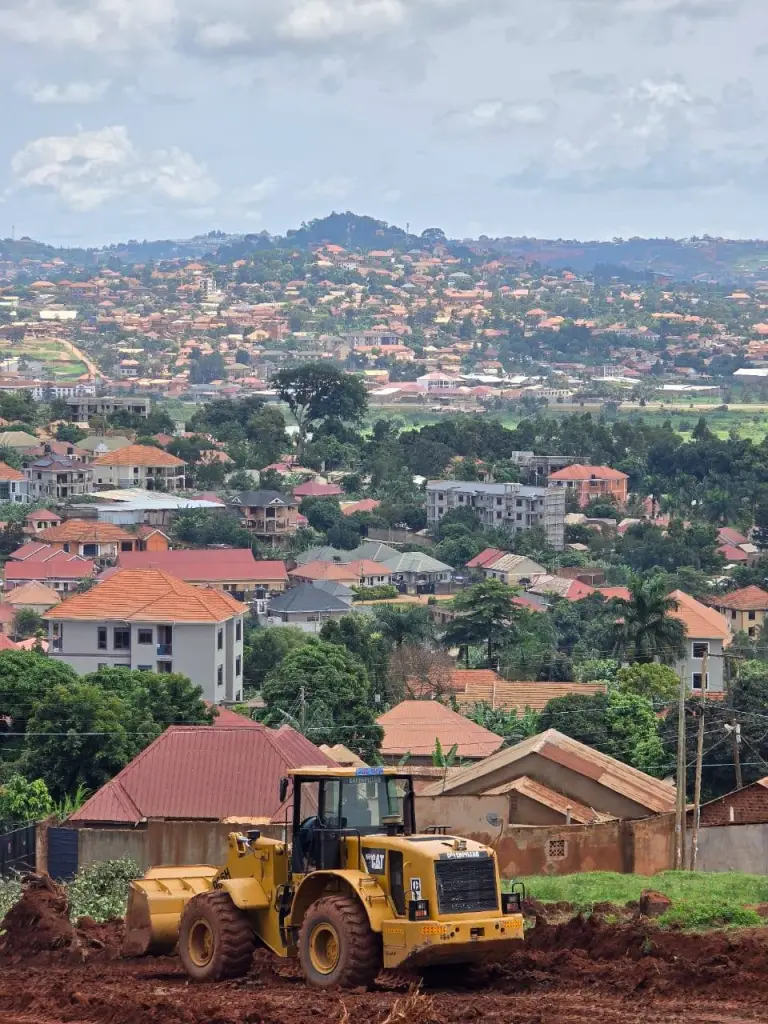
Seguku does not announce itself loudly. It sits along the Entebbe Road in the way that genuinely desirable addresses tend to — quietly confident in what it offers, drawing a specific type of buyer and tenant who has done the research, knows what they are looking for, and recognises when they have found it. It is one of the Entebbe Road corridor’s most established residential neighbourhoods: green, relatively low-density, well-connected by the Kampala–Entebbe Expressway, and positioned at precisely the distance from Kampala’s CBD that serious residential investors have learned to pay attention to — close enough for daily convenience, far enough for genuine peace.
Looking to build or improve your house or rentals?
We offer home construction and improvement services including building, renovation, painting, tiling, plastering, landscaping, kitchen upgrades, and more.
What sets Seguku apart within the Entebbe Road corridor is a combination of factors that no single one of them delivers alone: the quality of its existing residential stock, the character of its neighbourhoods, its proximity to Lubowa and Kajjansi’s established infrastructure, its Expressway access, and the specific tenant profile that the corridor produces — diplomatic families, senior professionals, airline and airport staff, and high-income Kampala households who have made a deliberate choice to live south rather than north. Together, these factors create a market that rewards quality and punishes shortcuts, that appreciates steadily rather than spectacularly, and that delivers the kind of rental income that patient investors build real wealth from.
This guide covers Seguku in full — its geography and position within the Entebbe Road corridor, the sub-area of Katale within Seguku, land prices and what determines them, the residential property market from entry-level to premium, rental demand and rates, investment return expectations, construction standards, how it compares to other Entebbe Road addresses, the due diligence every buyer must complete, and the risks that every honest assessment must include.
Where Seguku Sits and Why the Position Works
Seguku sits in Wakiso District, along the Entebbe Road corridor, approximately 12 to 15 kilometres south of Kampala’s CBD. It occupies a position between the inner Entebbe Road neighbourhoods — Nateete, Namasuba, and Lubowa — and the more mid-corridor addresses of Kajjansi and Kitende. That placement gives Seguku an important characteristic: it is close enough to Kampala to offer a genuinely comfortable daily commute, particularly via the Kampala–Entebbe Expressway, while sitting far enough south to have maintained the green, quiet residential character that the inner suburbs have progressively lost to commercial encroachment and density.
Via the Expressway, travel from Seguku to Kampala’s CBD takes approximately 20 to 35 minutes under normal conditions — making it one of the more accessible outer-corridor addresses in terms of real daily commute time. To Entebbe International Airport, the journey runs 20 to 30 minutes, placing Seguku well within the airport-proximity zone that defines the Entebbe Road’s unique tenant profile. Access to Lubowa’s commercial and healthcare infrastructure — some of the best in Wakiso District — is a short drive north along the corridor.
The Entebbe Road itself — as we have covered in our Entebbe Road commercial property guide and our Entebbe investing guide — is not simply a suburban residential corridor. It is one of Uganda’s most strategically significant road routes, connecting Kampala to the international airport and carrying the demand of the diplomatic community, international organisations, and the country’s most internationally-oriented residential market. Seguku’s position on this corridor gives it access to demand streams that no northeastern suburb can replicate.
Seguku’s Residential Character: What Makes It Distinctive
Seguku has developed a residential character that reflects both its location on the Entebbe Road and the profile of buyers and tenants who have chosen it over the past decade. The neighbourhood is predominantly low-to-medium density — standalone homes on generous plots dominate the landscape, with apartment development present but not yet at the scale seen in the northeastern corridor. That density profile is one of Seguku’s most important assets: it gives the area a sense of space and calm that higher-density suburbs simply cannot offer, and it is precisely this character that the corridor’s premium tenant base — diplomatic families, senior executives, expatriates — actively selects for.
Tree cover is substantial. Compound sizes are generous. The streetscapes reflect homes built by owners who intended to stay — well-maintained perimeter walls, landscaped gardens, and properties that signal investment in quality rather than a quick development turnaround. Our own landscape design project in Seguku — a full outdoor transformation that demonstrates how professional landscaping elevates both the aesthetic and market value of a property in this neighbourhood — is an example of the investment in outdoor quality that Seguku homeowners bring to their properties. In this market, a well-landscaped compound is not a luxury; it is part of what separates a property that commands premium rent from one that competes at average rates.
The sub-area of Seguku Katale — a specific pocket within the broader Seguku neighbourhood — sits within this same character framework but occupies a particularly well-regarded position: prime and well-developed, with strong property demand from buyers and tenants who know the area, and with access to the key amenities and road connections that make the Entebbe Road’s inner-corridor addresses work for the professional household segment.
Land in Seguku: Pricing, Tiers, and What Buyers Need to Know
Land in Seguku is priced at a level that reflects both its Entebbe Road corridor positioning and its proximity to Kampala — meaningfully higher than mid-corridor addresses like Kitende and substantially higher than the northeastern suburbs, but below the premium commanded by the innermost Entebbe Road neighbourhoods of Lubowa and Namasuba. Within that band, the key pricing drivers are proximity to the Expressway, plot size, road access quality, and title type.
Expressway-adjacent and main road-fronting plots in Seguku command the highest prices within the neighbourhood. A 12 to 15-decimal plot with tarmac frontage or very close Expressway access prices from $80,000 to $140,000 depending on exact location, size, and title. These are premium plots that attract high-income home builders, commercial developers, and investors who understand the value of road visibility and commute convenience on this corridor. Larger plots of 25 decimals and above on the main road price from $150,000 to $260,000 and are suited to apartment block development, gated estate schemes, or commercial-residential mixed-use.
Standard residential plots in the well-developed internal areas of Seguku — set back from the main road but with good access road quality — price from $55,000 to $100,000 for 12 to 15-decimal plots. These represent the primary entry point for individual home builders and smaller-scale rental investors who want an Entebbe Road address without the full premium of main road frontage. At this price level, the Seguku address, the corridor’s tenant profile, and the neighbourhood’s residential character are all fully accessible.
Larger estate and development plots of 40 decimals and above are increasingly scarce in Seguku as the neighbourhood’s density grows. When they come to market, they price from $200,000 to $400,000 depending on size, road access, and location. These are appropriate for investors planning gated residential estates, larger apartment developments, or premium hospitality and short-stay accommodation that serves the corridor’s international tenant base.
Land appreciation in Seguku has been consistent and above the Greater Kampala average over the past decade — driven by the Expressway’s impact on commute times, the corridor’s growing international tenant profile, and the structural scarcity of Entebbe Road land relative to the northern corridors. The corridor is bounded by Lake Victoria to the west and narrows toward the airport peninsula, which limits total land supply in a way that the Gayaza and Kira corridors are not limited. That scarcity dynamic is a structural support for Seguku land values that will only intensify as the corridor matures.
Residential Houses in Seguku: From Well-Finished to Exceptional
Seguku’s completed residential property market reflects the neighbourhood’s character: homes built to a standard that the Entebbe Road’s premium tenant and buyer base demands, on plots that offer the space and outdoor living quality that the corridor is known for. The range available spans from well-finished entry-tier 3 and 4-bedroom properties to exceptional premium homes that compete with the best residential stock anywhere in Greater Kampala.
The Seguku Katale residential offering starts with our newly constructed residential home in Seguku Katale — located in a prime and well-developed neighbourhood along Entebbe Road that is known for its accessibility and proximity to key amenities, offering a high-end living experience that captures what this sub-area of Seguku delivers. This property exemplifies the quality of new construction entering Seguku’s market: built to a specification that meets the demands of the Entebbe Road’s discerning buyer and tenant profile, in a location with strong and sustained demand from professionals and families who have chosen the southern corridor deliberately.
At the premium end of Seguku’s residential market, our exceptional 5-bedroom home in Seguku is one of the finest residential properties currently available on the Entebbe Road corridor. The word “exceptional” in this context is not marketing language — it is an accurate description of a property that delivers on every dimension that the Entebbe Road’s premium market demands: bedroom count and bathroom provision that serves a senior executive or diplomatic family, a design and finish quality that meets the inspection standards of institutional tenant procurement processes, and a location within Seguku that puts the Expressway, Lubowa’s amenities, and the airport within reach of a manageable daily routine.
Across Seguku’s residential sale market, price ranges by bedroom category reflect the neighbourhood’s premium positioning:
Three-bedroom homes in well-finished condition on adequately sized plots price from $150,000 to $230,000 in Seguku. These attract professionals and smaller families who want an Entebbe Road address and the corridor’s lifestyle advantages without the full scale of a 4 or 5-bedroom property.
Four-bedroom homes — the most actively transacted category on the corridor — price from $200,000 to $320,000 for well-finished properties in good Seguku locations. This is the category where the diplomatic and corporate tenant market is most actively concentrated, and properties in this range that meet the full specification of that tenant profile — quality finishes, generator backup, borehole water, proper compound, reliable security — command the rental rates that make the investment economics work compellingly.
Five and six-bedroom premium homes price from $290,000 to $500,000 and above in Seguku, depending on plot size, finish level, and specific location within the neighbourhood. These properties compete directly with the most premium residential stock in Lubowa and the lower end of Kololo’s expatriate-oriented market, while offering materially more space and compound size for equivalent or lower purchase prices.
All residential properties we list in Seguku are on fully titled land and are eligible for mortgage financing through Uganda’s commercial banking sector. Our complete mortgage guide covers how financing works in Uganda from application to disbursement, and our guide to mortgage advantages is useful for buyers weighing the cash-versus-financing decision on a property of this value.
The Rental Market in Seguku: Premium Rates and Premium Tenants
Seguku’s rental market is one of the most internationally-oriented residential rental markets in Greater Kampala outside of Kololo, Naguru, and the core diplomatic zones. The combination of Expressway access, airport proximity, green residential character, and quality housing stock attracts a tenant base that no northeastern suburb can replicate: diplomatic households, senior UN and NGO staff, multinational corporate tenants, airline and airport personnel, and high-income Ugandan professionals who have made a deliberate choice to live on the southern corridor.
Understanding this tenant base is the foundation of understanding Seguku’s rental market. These are not the same tenants who fill two-bedroom apartments in Kira or Namugongo. They come with institutional lease structures, housing allowance budgets that absorb the corridor’s premium, and tenure durations — typically one to three years per placement — that produce the kind of sustained, predictable rental income that serious property investors build portfolios around. They have specific and non-negotiable requirements: quality construction, reliable power and water, proper compound security, and a residential environment that is demonstrably quiet and safe. Properties that meet these requirements in Seguku compete for a tenant pool that has very few alternatives at the same price level in comparable locations.
Rental rates in Seguku by property type and specification:
Three-bedroom well-finished standalone homes with servant quarters, perimeter security, and reliable utilities: $700 to $1,100 per month. These attract smaller diplomatic families, senior professionals, and corporate staff on mid-level housing allowances.
Four-bedroom homes at quality specification with full utility infrastructure, generator backup, borehole water, landscaped compound, and proper security: $1,000 to $1,700 per month. This is the prime diplomatic and senior corporate rental bracket in Seguku — the category where institutional leases are most common and vacancy is lowest for well-specified properties.
Five and six-bedroom premium homes at flagship specification: $1,600 to $3,000 per month and above for properties that meet the full brief of senior diplomatic and executive household procurement. At the upper end of this range, Seguku competes with Naguru and Kololo for the same tenant pool — senior UN and NGO representatives, heads of mission, and multinational country directors — at a price point that frequently offers better space and compound quality for equivalent monthly cost.
Apartment units in Seguku — less common than standalone homes given the neighbourhood’s residential character and density profile — rent from $450 to $750 per month for well-finished 2-bedroom units, and $700 to $1,100 per month for 3-bedroom apartments in quality blocks. As Seguku’s density grows and apartment development increases along its main road sections, this segment will become more significant — but the neighbourhood’s premium character means that only well-specified apartment development succeeds at these rent levels.
Vacancy in Seguku’s quality rental market is structurally low. Well-specified, well-managed properties in good Seguku locations — particularly in the 4 and 5-bedroom standalone category — experience occupancy rates consistently above 90 percent annually. The combination of a small supply of quality homes and a sustained international tenant demand base means that good properties in Seguku attract tenants and retain them. Turnover happens when postings end, not because tenants choose to leave voluntarily.
We have residential properties for rent in and around Seguku. Contact our team to discuss what is currently available and to arrange viewings.
Investment Returns in Seguku: How the Numbers Work
Seguku’s investment return profile sits at the upper end of the Entebbe Road corridor’s spectrum — high absolute rental rates, strong occupancy, long tenancy durations, and a capital appreciation trajectory driven by structural land scarcity and sustained international demand. The trade-off, as with all premium corridor markets, is a higher entry cost that requires more capital to enter but produces a more reliable and higher-quality return than lower-cost markets deliver.
A practical scenario for the 4-bedroom standalone home category — Seguku’s most active investment bracket:
Land at approximately $90,000 to $130,000 for a well-located 14 to 20-decimal plot. Construction of a quality 4-bedroom home with servant quarters, perimeter wall with electric fence provision, generator infrastructure, borehole water system, and quality finishes throughout: approximately $90,000 to $130,000. Total investment: $180,000 to $260,000.
At $1,200 per month in corporate or diplomatic rental income — a conservative estimate for a quality 4-bedroom property in Seguku — gross annual income is $14,400. Gross yield: approximately 5.5 to 8 percent. At $1,500 per month — achievable for a premium-specified property in Seguku’s best locations with full institutional tenant brief — gross annual income rises to $18,000 and gross yield reaches 7 to 10 percent.
These gross yields are comparable to or slightly below the northeastern corridor’s inner sub-markets in percentage terms. But the comparison misses what matters: the quality of the return in Seguku is materially superior. The vacancy risk is lower, the payment reliability is higher, the tenancy durations are longer, and the wear on the property from institutional tenants is lower than from the private tenant market. The risk-adjusted net yield — accounting for these qualitative factors — is stronger in Seguku than the gross yield percentage alone conveys.
For the 5-bedroom premium category, the numbers are more compelling on an absolute basis:
Total investment of $280,000 to $400,000 for land and premium construction. At $2,000 per month in rental income from a senior diplomatic or executive tenant, gross annual income is $24,000 and gross yield is approximately 6 to 8.5 percent. At $2,500 per month for the best-positioned, best-specified properties, gross annual income is $30,000 and gross yield approaches 7.5 to 10.7 percent. With tenancy durations of 2 to 3 years as standard in this market segment, the compound income from a single well-specified property in Seguku over a 10-year holding period is substantial.
Capital appreciation is the second and arguably more powerful dimension of Seguku’s investment return over a medium-to-long horizon. Land on the Entebbe Road corridor is structurally scarce in a way that the northern corridors are not. The airport to the south, Lake Victoria to the west, and the corridor’s established high-income residential character create demand for a fixed and diminishing supply of developable land. Buyers who enter the Seguku market at current prices are buying into a scarcity dynamic that will only intensify as development matures and available plots disappear.
Building in Seguku: Construction Standards That the Market Demands
Construction quality in Seguku is not a differentiator — it is a baseline requirement. The neighbourhood’s tenant and buyer profile has expectations that are simply non-negotiable for a property to compete in the premium rental market. Investors who build to average standards will find their properties sitting in the gap between the premium market they are targeting and the mid-market they are actually delivering, achieving neither the rental rates of the corridor’s best properties nor the volume occupancy of the northeastern corridor’s more affordable market.
What the Seguku market demands in a quality rental property:
Structural integrity and finish quality that withstands detailed inspection — institutional tenant procurement processes involve site visits and property assessments that expose shortcuts quickly. Reliable power backup, typically a generator with automatic transfer switch, or a solar system capable of running essential loads. Borehole water with a storage tank system that maintains supply through NWSC outages. Full perimeter security — wall, electric fence provision or razor wire, controlled access gate, and CCTV. A maintained compound with professional landscaping — not an afterthought, but a deliberate investment in the property’s presentation and market value.
Our construction team has delivered multiple projects in Seguku, including our kitchen installation project in Seguku — a full worktop, backsplash tiling, and cabinet installation — and our earlier comprehensive kitchen cabinets, wardrobes, tiles, and walk-in closet installation project in Seguku that demonstrates the level of interior finishing our team delivers. Our Seguku landscape design project shows the outdoor transformation our team provides — converting functional outdoor space into a property asset that increases both market value and tenant appeal. These projects are not illustrations of what we aspire to deliver; they are examples of what we have already delivered in this neighbourhood.
Indicative construction benchmarks for Seguku and the inner Entebbe Road corridor:
A 3-bedroom home finished to a standard that commands $750 to $950 per month in the Seguku rental market costs approximately $60,000 to $90,000 to construct. Adding the full utility and security package — servant quarters, perimeter wall with electric fence, borehole, generator, professional landscaping — brings total construction cost to $75,000 to $115,000.
A 4-bedroom home at the quality standard that serves the corporate and diplomatic rental market costs approximately $90,000 to $140,000 in construction, with the full utility and security package adding $18,000 to $28,000. Total construction budget: $108,000 to $168,000.
A 5 or 6-bedroom premium home built to compete for the senior diplomatic and executive tenant market costs approximately $150,000 to $230,000 in construction. At this specification level, the interior finishes, structural design, outdoor living provisions, and utility systems all need to meet a standard that institutional procurement processes will approve. There are no shortcuts at this price point that do not ultimately cost more than they save.
Our Home Construction and Improvement Services page covers the full scope of what we build and improve, and our construction process guide explains how every project progresses from initial design and site assessment through to final handover and post-completion support.
Who Is Buying and Renting in Seguku
Seguku’s buyer and tenant base is among the most internationally-oriented of any suburban address in Uganda outside of Kampala’s inner premium zones. Understanding who these people are is essential to making good investment decisions in the neighbourhood.
High-income Ugandan professionals and business owners form the largest single buyer segment — people who have made the conscious decision that the Entebbe Road offers a quality of life that the northern suburbs, for all their convenience, cannot match. Doctors, lawyers, senior corporate executives, successful entrepreneurs, and established business families who want a property that reflects their standing and serves their lifestyle. They are buying in Seguku because it gives them the best combination of quality, space, Expressway access, and proximity to the airport that is available at a price below the fully-priced inner Entebbe Road addresses.
Diplomatic and international community tenants and buyers are the defining segment of Seguku’s rental market and a growing segment of its purchase market. Staff from embassies, high commissions, international organisations, and NGOs who are posted to Uganda for 2 to 4-year terms need quality residential accommodation within the Entebbe Road corridor. Many choose to rent during their posting; some who fall in love with the corridor buy. Either way, they are the tenant and buyer profile that sustains Seguku’s premium positioning.
Diaspora investors targeting the Entebbe Road corridor for its prestige, appreciation track record, and premium rental income potential are an increasingly active buyer segment in Seguku. For Ugandans abroad who want to invest in a flagship property that will serve as a future home on return and generate premium rental income in the interim, Seguku’s combination of quality, location, and international tenant base is frequently identified as the optimal match. Our complete diaspora investor guide covers how to navigate the full process of remote purchase, construction management, and rental setup from abroad.
Airport and airline staff seeking residential addresses within the corridor’s airport-proximity zone represent a consistent demand segment for Seguku’s 3 and 4-bedroom standalone rental market. Senior airline staff, airport management, and international flight crew on extended Uganda deployments choose Seguku because it offers quality living at a commute distance from the terminal that is manageable without the full premium of the closer Entebbe Town addresses.
Seguku vs. Its Neighbours: How It Compares Along the Corridor
Seguku vs. Lubowa: Lubowa sits closer to Kampala on the Entebbe Road — the inner premium address of the corridor, with higher development density, established commercial and healthcare infrastructure, and commensurately higher land prices. Our 6-bedroom, 5-bathroom home in Lubowa is an example of the premium residential quality available in that sub-market — and the price difference between an equivalent property in Lubowa and one in Seguku reflects Lubowa’s greater proximity to the city. For buyers who want the corridor’s best city access, Lubowa is the stronger choice. For those who want more space and a quieter environment at a slightly lower price, Seguku delivers.
Seguku vs. Kajjansi: Kajjansi sits slightly south and east of Seguku, further along the corridor, and carries a more mixed-use commercial character alongside its residential areas. Kajjansi is more affordable than Seguku but has a less exclusively residential character. Buyers seeking pure residential quality in a quieter environment will generally prefer Seguku. Those who want commercial visibility or a more active neighbourhood dynamic may find Kajjansi relevant.
Seguku vs. Kitende: Kitende sits further south along the corridor — slightly less expensive than Seguku, with the same Expressway access and airport proximity but a somewhat less developed immediate amenity base. For investors with a slightly lower budget who want Entebbe Road exposure, Kitende is a compelling alternative. Our Kitende Real Estate Guide covers that sub-market in full. For buyers who want the more established, better-amenitied inner-corridor position of Seguku, the price premium over Kitende is justified.
Seguku vs. the northeastern corridor: This is not a direct comparison — the corridors serve fundamentally different buyer and tenant profiles — but investors weighing where to deploy capital will frequently consider both. Our Kampala vs. Entebbe investment comparison covers this trade-off in full, including how the yield and appreciation profiles of the two corridors differ and what type of investor each serves best. Our guides for Kyanja, Kisaasi, and Kira cover the northeastern corridor’s strongest markets in comparable detail to this guide.
For the full picture of where Seguku and the Entebbe Road corridor sit within Wakiso District’s investment landscape, our Wakiso District real estate overview maps all four corridors and how they compare. And for a calibrated honest assessment of whether Entebbe Road investment suits your specific profile, our Entebbe investment analysis addresses that question directly.
Land Tenure in Seguku: What Every Buyer Must Verify
Seguku’s land sits within Wakiso District and is subject to the tenure framework that applies across Buganda — predominantly Mailo land, with Freehold and Leasehold titles present in formally planned parts of the neighbourhood and in estate developments. The corridor’s premium positioning and higher property values do not reduce the importance of title due diligence — if anything, they increase it, because the financial consequences of a title problem are proportionately greater at Seguku’s price levels than in lower-cost markets.
Before signing any sale agreement or making any payment for land or property in Seguku, every buyer must conduct a physical title search at the Uganda Land Registry, engage a qualified conveyancing lawyer to review all documentation, and verify that the plot’s physical boundaries match the title documents on the ground. This process is not optional and should not be shortened regardless of how confident or well-presented the seller appears.
Our Mailo land guide explains the full Mailo tenure framework, what bibanja interests mean for buyers, and how to navigate the verification process. Our Freehold land guide covers the alternative tenure type present in some Seguku properties. Our complete property buyer’s guide walks through every step of the due diligence process that every buyer should complete before committing to any purchase in Uganda. We assist buyers with this process as a standard part of how we work.
Risks to Know Before Investing in Seguku
Seguku is a strong and well-established market. Its risks are specific and manageable but must be understood clearly before committing capital.
High entry cost relative to gross yield: Seguku’s land premium and construction quality requirements mean that total development investment is substantial. Gross yields in the 6 to 10 percent range are strong for a market of this quality and stability, but investors who are benchmarking against the 12 to 18 percent gross yields available in early-stage Gayaza or Kira sub-areas will find Seguku’s numbers less immediately impressive. The comparison is only meaningful if the quality of the return — vacancy risk, tenant reliability, tenancy duration, and capital appreciation — is also factored in. On that risk-adjusted basis, Seguku competes very well.
Expressway toll sensitivity: As with all inner Entebbe Road addresses, daily use of the Kampala–Entebbe Expressway adds a recurring cost for tenants and buyers who commute to the city. At the diplomatic and corporate end of the market, this is absorbed by housing and transport allowances. For self-funded professionals at the lower end of the Seguku market, it is a real ongoing cost that affects the effective value of the location.
Construction quality expectations are absolute: There is no middle-ground product in Seguku’s premium rental market. A property built to 80 percent of the required specification will rent at a discount that is disproportionate to the 20 percent construction saving — and will attract a lower-tier tenant that produces higher vacancy, more maintenance demand, and lower returns than the market’s premium properties deliver. The specification requirements of the Entebbe Road’s premium tenant base are non-negotiable, and investors who accept this from the outset build properties that the market rewards. Those who resist it build properties that the market ignores.
Smaller total tenant pool than the northeastern corridor: The diplomatic and corporate tenant segment is genuine but not large in absolute numbers. Investors developing multiple properties in Seguku simultaneously are not drawing from an unlimited pool — supply increases in this segment can create competitive pressure on rents and occupancy for less well-specified properties. The answer is not to avoid the market but to build to a standard that competes at the top of the available tenant pool rather than the middle of it.
Title due diligence: As noted above, Mailo land tenure requires careful and thorough verification. The Entebbe Road’s premium positioning makes buyers susceptible to sellers who rely on the area’s reputation to substitute for proper documentary verification. Do the due diligence every time, without exception.
How to Work With Mbogo Real Estate Core International in Seguku
We are active in Seguku across property sales, construction and interior improvement projects, landscaping, and rental management. Our construction portfolio in Seguku includes kitchen installations, interior finishing, walk-in closet and wardrobe systems, tiling, and full outdoor landscaping — the full range of services that a quality residential property in this market requires, from initial build to ongoing improvement. Our residential listings in Seguku are built by our own team or have been assessed by us directly, which means we know the quality, the title, and the site conditions from firsthand experience.
If you are a buyer, we can show you available properties in Seguku, arrange site visits, assist with title due diligence, and guide the transaction through to completion. If you are an investor planning to develop, we can help you identify appropriately priced land, design and build to the specification the market demands, and set up rental management targeting the corridor’s diplomatic and corporate tenant base. If you are a diaspora buyer evaluating Seguku from abroad, we manage the full process remotely with regular reporting and clear communication at every stage. For tenants looking for a quality home on the Entebbe Road corridor, we have properties across Seguku and the broader corridor at multiple price points — tell us your specification and budget and we will match you with what is available.
If you already own property in Seguku and are considering renovations, kitchen upgrades, landscaping improvements, or a full interior refresh to bring your property up to the rental standard the market demands, our construction and improvement team is available for exactly that work — as our Seguku project portfolio demonstrates.
Contact our team here to start the conversation, or visit our partnership and collaboration page to understand how we work with sellers, property owners, and development partners on the Entebbe Road corridor.
The Summary Case for Seguku
Seguku is the inner Entebbe Road corridor at its most refined: a neighbourhood with an established premium residential character, a tenant profile that is internationally-oriented and institutionally-structured, land appreciation driven by genuine scarcity, and a construction standard that the market demands and rewards. It is not the place for investors who want maximum gross yield from low-cost land and average construction. It is the place for investors who understand that the quality of the return matters as much as its percentage — that a 7 percent gross yield from a diplomatic tenant on a 3-year lease in a well-built Seguku property is a fundamentally different investment from a 14 percent gross yield from a variable tenant in an outer Kira apartment block, even if the percentage comparison favours the latter.
For buyers who want a home that delivers both quality of life and long-term asset value, Seguku is one of the finest addresses available in Greater Kampala at a price that still makes sense relative to the inner-city premium markets it competes with on quality. For tenants who want the Entebbe Road corridor’s combination of green living, airport access, and quality housing within a commutable distance of Kampala, Seguku is where all of those things are most completely and most consistently available.
We are here to help you find your position within it. Get in touch with our team today.
Explore Our Properties Across Uganda
Beyond Seguku’s market, here is our current inventory of land, homes, and rentals in Kampala and across Uganda:
Leave a Reply