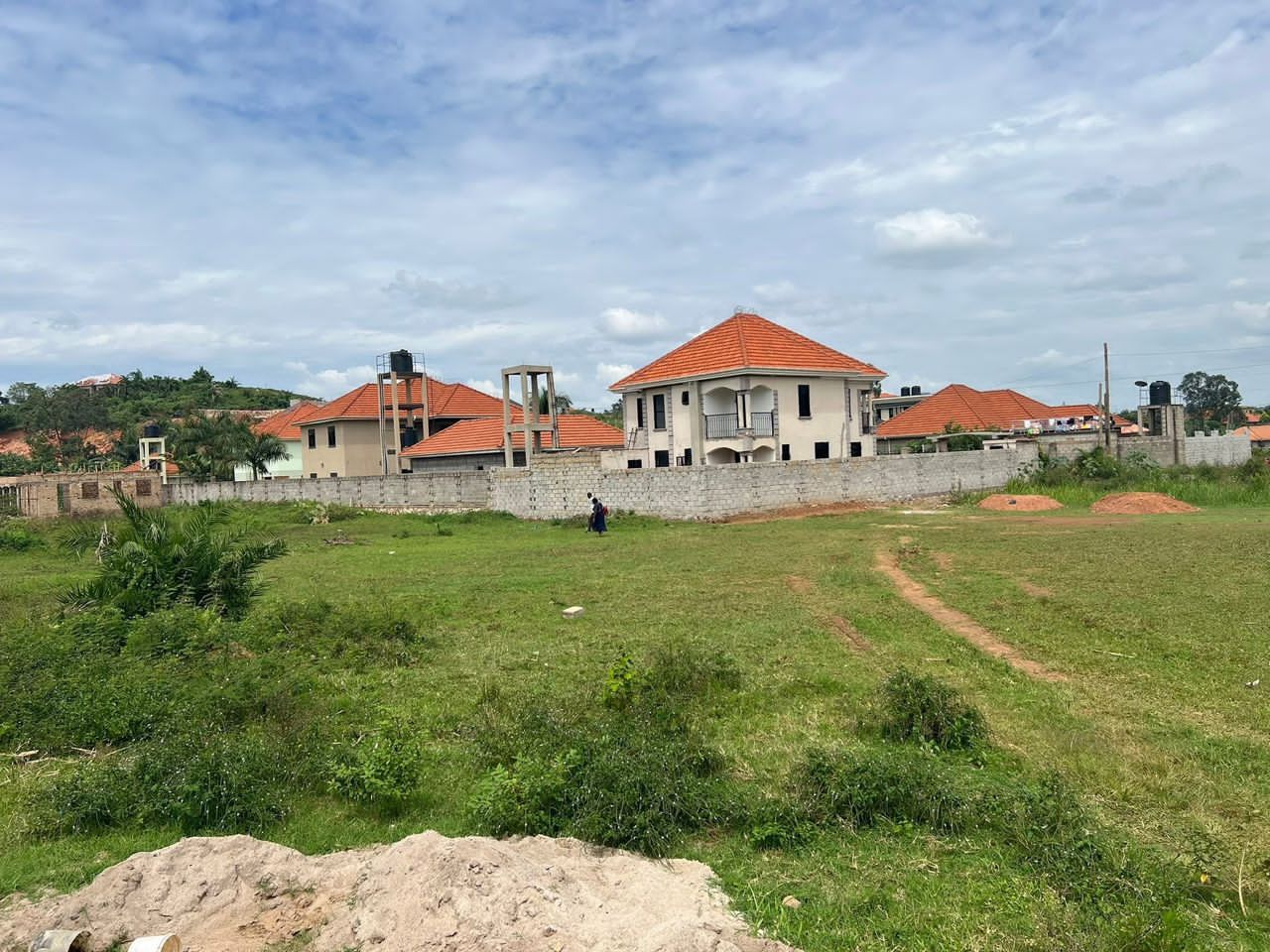
Kira is not simply a suburb of Kampala. It is a municipality in its own right — with its own administrative structure, its own commercial energy, and a property market that has grown large enough and deep enough to stand entirely on its own terms. Investors who approach Kira as just another extension of the northeastern corridor quickly discover that they are dealing with something more substantial: a city within a city, where demand comes from multiple directions, where sub-areas have meaningfully different characters and price points, and where the volume of transactions reflects a market with genuine liquidity.
This guide covers Kira in full — not just the broad stroke, but the sub-areas that make up its geography: Nsasa, Mulawa, Bulindo, Kitukutwe, Kimwanyi, Kijabijo, and the wider municipality. Each sub-area has its own investment logic, price point, and buyer profile. Understanding the differences between them is what separates a well-positioned investment from an average one. If you are buying land, purchasing a completed home, developing a rental property, or looking for a place to rent anywhere in the Kira corridor, this is the guide that gives you the full picture.
Looking For Our Services?
Choose your option below:
Kira’s Geography: A Municipality With Multiple Centres of Gravity
Kira Municipality sits in Wakiso District, directly north of Kampala, sharing a boundary with the capital along the Kampala–Kira Road corridor. To the west it borders Nansana and Gayaza; to the east it meets Namugongo; to the north it stretches toward Matugga and the broader Gayaza Road corridor. The municipality spans a large area and encompasses an extraordinary diversity of residential and commercial development — from high-density apartment zones near its southern boundary with Kampala to quiet, spacious residential estates in its northern reaches.
Kira Town Centre — along Kira Road — is the commercial hub, anchoring the municipality’s retail, banking, healthcare, and service infrastructure. From this hub, a network of roads fans outward into the sub-areas: Nsasa Road, Mulawa Road, Bulindo Road, and the routes that connect to Kitukutwe, Kimwanyi, and Kijabijo. This road network is one of Kira’s defining assets as an investment market — it means that even sub-areas well off the main Kira Road corridor have meaningful access to the municipality’s amenities and onward connectivity to Kampala.
Travel time from Kira Town Centre to Kampala’s CBD typically runs 30 to 50 minutes depending on traffic and origin point. From the deeper sub-areas — Bulindo, Kitukutwe, northern Mulawa — add 10 to 20 minutes. That commute profile places Kira at the outer edge of a daily commute for most Kampala employees, which has shaped the municipality’s dominant buyer and tenant profile: families and professionals who have made a deliberate choice to trade inner-city proximity for space, amenity quality, and value.
Kira is covered in our Wakiso District real estate overview as one of the district’s four primary investment corridors, and it consistently ranks highly in our Top 10 Neighbourhoods for residential land investment in Greater Kampala. This guide goes deeper into why.
What Has Driven Kira’s Growth Into a Full Municipality
Kira’s elevation from a town council to a full municipality — and its evolution into one of Uganda’s most active suburban property markets — did not happen by accident. It is the product of several converging forces that have been building for over a decade and that continue to drive demand today.
Population overflow from Kampala. As Kampala’s inner suburbs filled up and land prices in Ntinda, Naguru, Muyenga, and Kololo rose beyond the reach of middle-income buyers, demand moved outward. Kira — directly adjacent to Kampala’s northern boundary, with good road access and established amenities — was the primary destination for that overflow. The professional and middle-class families who arrived in Kira in the early years of its growth built the residential character that has made it attractive to successive waves of buyers and tenants.
Self-contained commercial development. Kira did not remain dependent on Kampala’s commercial infrastructure for long. Schools, hospitals, banks, supermarkets, hardware stores, and professional services established in the municipality as its population grew, creating a self-sufficient amenity base that allows residents to meet most daily needs without travelling into the capital. That self-sufficiency is now one of Kira’s most frequently cited advantages among its residents, and one of the strongest drivers of sustained rental and purchase demand.
Diverse land supply at multiple price points. Unlike smaller neighbourhoods that have a single price tier, Kira’s geographic scale means it offers entry points from $18,000 for modest plots in outer sub-areas to $200,000-plus for large commercial plots on the main Kira Road. That price diversity means the market accommodates first-time buyers, experienced investors, diaspora purchasers, and institutional developers simultaneously — giving the market a breadth and liquidity that smaller areas cannot match.
Nsasa: Kira’s Most Active and Highest-Demand Sub-Area
Nsasa is the sub-area within Kira that most consistently tops the demand charts for buyers and tenants across the municipality. Its position — relatively close to the main Kira Road corridor, well-served by established roads, and surrounded by developed residential and commercial infrastructure — makes it the first choice for buyers who want Kira’s value profile with the shortest commute and the most established amenity base.
Development density in Nsasa is high. Apartment blocks sit alongside standalone homes and small commercial developments across a network of both tarmac and well-maintained murram roads. The neighbourhood feels urban — busier and more built-up than Kira’s outer sub-areas — which is precisely what its tenant profile is looking for.
Land prices in Nsasa reflect its premium position within the municipality:
Standard 12-decimal residential plots (50×100ft) in Nsasa price from $35,000 to $65,000 depending on road access and title type. Plots with tarmac frontage or proximity to the main Nsasa Road sit at the upper end. Our active Nsasa land listings include multiple 12-decimal plots with ready titles, a 12-decimal residential plot in a well-organised setting, and larger 25-decimal plots suited to apartment block development or larger standalone home construction.
Completed homes in Nsasa range from modest 3-bedroom properties to well-finished 6-bedroom family homes. Our 3-bedroom home on a generous 25-decimal plot in Kira Nsasa — featuring a modern kitchen, servant quarters, and ample garden space with potential for a pool or expansion — is an illustration of the kind of residential property available in this sub-area. At the premium end, our 6-bedroom house in Kira Nsasa, newly constructed with 5 bathrooms and large living areas, demonstrates the level of quality that the upper end of Nsasa’s residential market can deliver.
For apartment block investors, Nsasa’s high occupancy rates and professional tenant base make it the strongest-performing sub-area within Kira for rental returns. Two-bedroom apartments in well-managed Nsasa blocks rent from $280 to $450 per month, with well-finished 3-bedroom units achieving $400 to $600. These are among the highest rental rates within the Kira corridor, justified by the sub-area’s superior access and amenity profile.
Mulawa: Established Residential Character With Growing Commercial Energy
Mulawa is one of Kira’s most well-developed residential sub-areas — a neighbourhood with an established community character, good infrastructure, and a market that has matured enough to attract both end-users and income-focused investors in roughly equal measure. It sits to the north and northwest of Nsasa, connected by a road network that gives residents access to both Kira Town and the broader Kampala corridor.
What distinguishes Mulawa is its balance. It is not as densely developed as Nsasa, which means plot sizes remain slightly more generous and the residential character is quieter — but it is sufficiently serviced and connected that it does not feel like an outer-edge location. That middle-ground position makes it attractive to a broad range of buyers: families who want space without isolation, investors who want proven rental demand with slightly better land value than Nsasa, and diaspora buyers who want a recognisable, established address within the Kira corridor.
Land prices in Mulawa range from $30,000 to $60,000 for standard 12 to 15-decimal residential plots. Larger plots of 20 to 25 decimals price from $55,000 to $100,000 depending on road access and location within the sub-area. We have multiple active listings in Mulawa, including a 15-decimal plot with a ready title, a 25-decimal plot ideal for residential or commercial development, and a 20-decimal plot perfectly positioned for either residential or commercial use.
Completed homes in Mulawa span the full residential range. Our 4-bedroom house in Kira Mulawa — newly constructed with 4 bathrooms, a spacious sitting and dining area, modern kitchen, and servant quarters on fully titled land — is a strong example of the investment-ready residential stock available in this sub-area. Rental houses in Mulawa of this specification achieve $450 to $700 per month from professional family tenants, delivering solid annual returns against current property values.
Looking For Our Services?
Choose your option below:
Bulindo: Space, Quiet, and a Long-Horizon Investment Case
Bulindo is one of Kira’s most distinctive sub-areas — a community that sits further north in the municipality and offers something that the denser, more urban sub-areas cannot: genuine space, quieter surroundings, and land at prices that reflect its position on the development curve rather than its destination. For a specific type of buyer — one who is thinking in five-to-ten-year horizons, who wants to build something substantial, or who simply wants to live with more room than the inner Kira sub-areas provide — Bulindo is a compelling proposition.
Our active presence in Bulindo spans construction and improvement projects — our tiling and home improvement work in Kira Bulindo is an example of the construction activity we have completed in this sub-area. That ground-level presence means we understand Bulindo’s specific character from direct experience: the road network, the development pattern, the type of properties that attract buyers and tenants, and the realistic price expectations for land and completed homes.
Land in Bulindo is among the most accessible within the Kira corridor. Standard residential plots of 12 to 15 decimals are available from $22,000 to $45,000, with larger plots of 25-plus decimals pricing from $50,000 to $90,000 depending on road access and title clarity. Half-acre plots — still available in this sub-area — can be found from $75,000 to $130,000, offering a scale of land that is simply not available at comparable prices in the inner sub-areas.
The investment case for Bulindo is primarily one of patient capital. Buyers who enter now at land prices that reflect the current development stage are buying into a corridor that has a clear trajectory: as Kira’s population continues to grow northward and as the municipality’s commercial infrastructure extends further out, Bulindo’s current prices will look, in five years’ time, like the early Nsasa prices look today. That is the opportunity. It requires patience and proper due diligence — but the fundamentals of the case are clear.
Kitukutwe: A Developing Sub-Area With Strong Residential Potential
Kitukutwe is a sub-area within Kira that sits in the municipality’s growing residential belt and represents the kind of opportunity that characterises the mid-stage Kira market: land that has moved past its earliest pricing but has not yet reached the maturity of Nsasa or Mulawa, in a location that is visibly developing and where residential character is strengthening year on year.
We have active listings in Kitukutwe at both the land and completed property level. Our 13-decimal plot in Kira Kitukutwe — with a ready title and good accessibility in a growing neighbourhood — is an example of the land available in this sub-area at an accessible entry point. Our residential plots in Kira Kitukutwe offer flexible investment opportunities for buyers who want to develop their own property in a prime and steadily developing part of the municipality.
Land in Kitukutwe prices from $28,000 to $55,000 for standard 12 to 15-decimal plots, depending on road access and specific location. This places it in a middle tier within the Kira corridor — more affordable than Nsasa, slightly more developed than Bulindo, and offering buyers the combination of reasonable entry cost and visible growth momentum that tends to produce good medium-term outcomes.
Rental housing in Kitukutwe is growing in volume as the sub-area’s residential population increases. Three-bedroom rental homes here achieve $350 to $550 per month for well-finished properties, with apartments in recently built blocks achieving slightly less than Nsasa rates but with comparable occupancy for quality units. Investors who build to a good standard in Kitukutwe find that tenant demand is consistent — the sub-area’s growing population has a healthy rental market below the premium price points of the inner Kira sub-areas.
Kimwanyi: Commercial-Residential Versatility in a Strategic Position
Kimwanyi is a sub-area within Kira that occupies a position close enough to the main road infrastructure to carry genuine commercial versatility alongside its residential character. Investors looking for plots that can serve either residential development or commercial use — without committing fully to one direction before understanding the local demand — find Kimwanyi’s flexibility particularly useful.
Our 20-decimal commercial and residential plot in Kira Kimwanyi is a strong illustration of what this sub-area offers: a substantial plot in one of the fastest-growing parts of the municipality, with the flexibility to develop residential units, a commercial building, or a mixed-use structure depending on where market demand points at the time of development. At current pricing, Kimwanyi land represents good value for investors who want both options open.
Land in Kimwanyi prices from $30,000 to $65,000 for 12 to 20-decimal plots, with location within the sub-area and proximity to tarmac road being the primary pricing drivers. The commercial overlay in this sub-area means that well-positioned plots — those with road visibility and access — can generate commercial rental income that standalone residential plots cannot, making the yield arithmetic for mixed-use development on Kimwanyi plots particularly attractive.
Kijabijo: Modern Residential Development in a Well-Connected Sub-Area
Kijabijo is one of the more recently developed residential sub-areas within Kira, characterised by newer construction, a well-planned feel, and a buyer profile that tends toward professionals and families who want a modern, well-finished home in a community that has not yet reached the density of the inner sub-areas. It is the kind of sub-area where the streetscapes are visibly improving year on year — more completed homes, more infrastructure, more services arriving to serve the resident population.
Our 4-bedroom house for sale in Kira Kijabijo — featuring 4 bathrooms, a modern kitchen with wardrobes, a spacious sitting and dining area, and servant quarters on fully titled land — is a good example of the residential property quality available in this sub-area. At current pricing, Kijabijo offers buyers a well-constructed, modern home at a price point that reflects its sub-area’s position in Kira’s hierarchy: more affordable than Nsasa, better quality and connectivity than Bulindo’s outer reaches.
Land in Kijabijo prices from $28,000 to $58,000 for standard residential plots. Given the sub-area’s clear development trajectory and the quality of new construction being delivered, buyers who enter now at land prices rather than completed property prices can capture meaningful capital appreciation as Kijabijo reaches its development maturity.
Looking For Our Services?
Choose your option below:
Completed Homes Across Kira: What Buyers Can Expect
Kira’s completed residential property market is one of the deepest in Greater Kampala. The municipality’s scale means that buyers have genuine choice across bedroom count, finish quality, plot size, and location — unlike smaller neighbourhoods where the available stock is narrow. Here is what the market looks like today across the key residential categories:
3-bedroom homes are the most commonly transacted category in Kira’s residential market, reflecting the family buyer profile that dominates the municipality. Well-finished 3-bedroom homes on 12 to 25-decimal plots price from $90,000 to $160,000, with the upper end representing properties with generous plot sizes, quality finishes, servant quarters, and garden space. Our 3-bedroom homes for sale in Kira are built by our own construction team and come with fully titled land, giving buyers the confidence of provenance and quality.
4-bedroom homes are the second most actively traded category and attract both owner-occupiers and investors planning to let the property. Prices range from $130,000 to $220,000 for well-finished properties across the municipality’s sub-areas. Our 4-bedroom home on 14 decimals — newly constructed with 5 bathrooms and servant quarters — and our 4-bedroom home on 12 decimals with 3 bathrooms and a modern kitchen are examples of what this category looks like at current pricing.
5 and 6-bedroom homes represent the upper end of Kira’s residential market and attract senior professionals, business owners, and investors looking for a primary residence that also holds value as an asset. Our 5-bedroom home on 18 decimals in Kira — newly constructed with modern finishes and ample outdoor space — and our 6-bedroom home in Kira with 5 bathrooms, servant quarters, and a well-designed layout are examples of what the premium residential tier delivers. These properties price from $190,000 to $320,000 for well-finished builds in prime sub-area locations.
All residential properties we list in Kira are on fully titled land and are eligible for mortgage financing. Our complete mortgage guide covers how financing works in Uganda, which banks to approach, and what the application process looks like from start to finish.
The Rental Market in Kira: Apartments and Standalone Houses
Kira’s rental market is the largest in the northeastern corridor by volume. The municipality’s population size — over 300,000 residents and growing — generates rental demand across every price band, from modest one-bedroom units to large family homes. This depth is one of Kira’s most important investment attributes: unlike smaller sub-markets where demand thins out quickly above a certain rent level, Kira has genuine occupancy across a broad range.
Apartments:
One-bedroom self-contained apartments in well-maintained Kira blocks rent from $150 to $240 per month, attracting single professionals, students, and young couples.
Two-bedroom apartments are the dominant rental category across Kira, consistent with the municipality’s family-oriented character. Monthly rents range from $260 to $420 for standard to good-finish units, and up to $550 for premium units with generator backup, borehole water, security, and quality fittings. In the better sub-areas — Nsasa and Mulawa in particular — vacancy periods for well-managed two-bedroom units are low, typically under two months per year.
Three-bedroom apartments, less common in Kira than in inner suburbs, rent from $380 to $600 per month and attract family tenants and senior professionals who need more space but prefer apartment security to standalone living.
Standalone houses:
Three-bedroom standalone rental homes in Kira price from $300 to $550 per month depending on sub-area, plot size, and finish quality. Properties in Nsasa and Mulawa with tarmac access, servant quarters, and well-maintained compounds command the upper end of this range. Properties in Kitukutwe and Kijabijo — slightly further from the centre — achieve $300 to $450 per month for comparable specifications.
Four and five-bedroom standalone homes rent from $500 to $900 per month in Kira’s better sub-areas, attracting senior executives, NGO households, and families with higher income levels. These properties benefit from Kira’s overall residential desirability and the relative scarcity of large, well-finished homes in the $600 to $900 rental band — supply is thinner at the upper end, which keeps occupancy high for quality properties.
We have apartments and standalone houses for rent across Kira’s sub-areas. Contact our team to discuss currently available units, arrange viewings, and find the property that fits your budget and requirements.
Investment Returns in Kira: What the Numbers Look Like
Kira’s investment return profile is shaped by the sub-area and property type, but the headline story is consistent: yields in Kira are strong relative to the investment required, driven by the combination of reasonable land prices (compared to inner suburbs), healthy rental demand, and low vacancy at the quality end of the market.
A practical investment scenario for Nsasa, the best-performing sub-area:
A 6-unit apartment block (two-bedroom units) on a 25-decimal plot involves land at approximately $55,000 to $70,000 and construction of $100,000 to $140,000, for a total investment of $155,000 to $210,000. At $320 per unit per month, gross monthly income is $1,920, or $23,040 annually. Gross yield: approximately 11 to 15 percent at current land and rental levels. Even allowing for management costs and vacancy, net yields of 7 to 10 percent are achievable — among the strongest in Greater Kampala’s established markets.
For Mulawa, where land is slightly cheaper but rental rates are similar:
The same 6-unit block with land at $45,000 to $60,000 and comparable construction costs produces total investment of $145,000 to $200,000 — generating equivalent rental income and a marginally better gross yield of 12 to 16 percent at the lower total investment range.
For Bulindo and Kitukutwe, where land costs are lowest:
Lower land costs reduce total investment, but rental rates are also slightly lower than the inner sub-areas. Gross yields in these zones are comparable to or slightly above the inner sub-areas — the lower rental rates are offset by the lower land costs, maintaining the yield profile while offering a lower absolute capital requirement for entry.
Capital appreciation adds the second dimension. Kira land has appreciated substantially over the past decade and continues to grow as the municipality fills in and northern Kampala’s population expands. Buyers in Bulindo, Kitukutwe, and Kimwanyi at today’s prices are buying into a trajectory that Nsasa buyers experienced 8 to 10 years ago.
Looking For Our Services?
Choose your option below:
Commercial Property in Kira: The Municipal Market
Kira’s population size and municipal status have created a commercial property market that is qualitatively different from what is available in Kampala’s sub-urban neighbourhoods. The municipality has genuine commercial demand — for retail space, office space, healthcare facilities, educational institutions, hospitality, and logistics — that sustains commercial rental levels and values across a range of property types.
Commercial plots along the main Kira Road corridor price from $120,000 to $300,000 for 25 to 50-decimal plots with tarmac frontage and commercial visibility. These plots attract developers building retail arcades, mixed-use blocks, and professional services facilities. The ground-floor commercial units in well-positioned Kira blocks rent from $250 to $600 per month depending on size, visibility, and location.
The mixed-use development model — ground-floor commercial with upper-floor residential apartments — performs particularly well on Kira’s main road plots because it captures both the commercial footfall of the municipal centre and the residential rental demand of the surrounding population. Investors who build mixed-use in well-positioned Kira locations are generating two income streams from a single plot, which materially improves the yield mathematics relative to pure residential development.
Contact our team to discuss commercial land availability and the development options that make sense for specific plots within Kira’s commercial corridors.
Who Is Buying and Renting in Kira
Kira’s buyer and tenant base is the most diverse of any sub-market in the northeastern Kampala corridor — a natural consequence of its size and the breadth of its price points.
Middle-income professional families are the dominant segment across both purchases and rentals. These are households with combined income in the range that makes Kira’s housing stock affordable to buy or rent: two-income couples, government employees, business owners, and mid-senior corporate staff who want a proper family home with space, safety, and good school access. They are Kira’s most reliable tenant segment and its most consistent buyer segment.
Diaspora investors are heavily active in Kira — more so, arguably, than in any other single municipality in Greater Kampala outside Kampala city itself. The combination of recognisable sub-area names (Nsasa, Mulawa in particular), established infrastructure, and clear development trajectory makes Kira legible to buyers evaluating remotely from abroad. Our complete diaspora investor guide covers how to navigate land purchase, construction, and rental management in Uganda from abroad, with specific guidance on due diligence and how to structure a remote investment safely.
Institutional and semi-institutional buyers — property investment companies, SACCOs, corporate housing programmes, and development funds — are active in Kira’s apartment block market in a way that is not typical of smaller sub-markets. These buyers bring larger capital, longer holding horizons, and more sophisticated underwriting, which provides price support at the upper end of the investment property market.
First-time buyers using mortgage financing represent a significant segment of Kira’s residential purchase market. The municipality’s range of price points means that a first-time buyer with a reasonable deposit and qualifying income can access a starter home in a decent sub-area — something that is increasingly impossible in Kampala’s inner suburbs. Kira’s role as a first-home market for Uganda’s growing professional class is one of its most durable demand drivers.
Building in Kira: Construction Costs and What Investors Need to Know
For investors buying land and developing rather than purchasing completed property, Kira’s construction market is important context. The municipality’s size means that building material supply chains are well-established, skilled labour is available locally, and the logistics of a development project are more straightforward than in more remote areas of Wakiso District.
Indicative construction benchmarks for Kira and the broader northeastern corridor:
A 3-bedroom standalone home of 130 to 150 square metres, finished to a quality standard that commands $380 to $500 per month in rent, costs approximately $40,000 to $65,000 to construct. Adding servant quarters, a perimeter wall, and borehole and generator infrastructure adds $8,000 to $15,000.
A 4-unit apartment block (two-bedroom units) on a 12 to 15-decimal plot, with full utility infrastructure and perimeter wall, costs approximately $70,000 to $100,000 in construction excluding land. Combined with land in Nsasa or Mulawa at $40,000 to $65,000, total development investment is $110,000 to $165,000.
A 6 to 8-unit block on a larger 25-decimal plot, mixing 2- and 3-bedroom units with quality finishes, costs approximately $115,000 to $175,000 in construction. At current Kira rental rates for well-finished units, this scale of development produces gross monthly income of $2,000 to $3,800 depending on unit mix and sub-area. Combined with land costs, total development investment of $160,000 to $240,000 produces gross yields of 12 to 18 percent in the better-performing sub-areas.
Our construction team has delivered projects across Kira’s sub-areas — residential homes, tiling and interior finishing, renovation, and apartment block development. Our Home Construction and Improvement Services page covers the full scope of what we build, and our construction process guide explains how a project moves from design and land assessment through to final handover.
Kira vs. Its Neighbours: How the Municipality Compares
Investors evaluating Kira are frequently also looking at neighbouring areas. Here is how the comparisons hold up.
Kira vs. Kyanja: Kyanja is more established, more expensive at the land level, and carries a slightly premium residential identity. Kira is larger, more commercially developed, and offers greater diversity of price points and property types. For investors wanting the widest possible range of options within a single market, Kira wins on breadth. For those wanting a tighter, more homogeneous premium residential market, Kyanja is stronger. Our Kyanja Real Estate Guide and our Kyanja vs. Kira structured comparison give both sides of this in full detail.
Kira vs. Kiwatule: Kiwatule is smaller, closer to Kampala’s centre, and carries a more specifically professional residential character. Kira is larger, more commercially diverse, and has a broader buyer and tenant base. For investors who want a tighter, more centrally located market, Kiwatule is compelling. For those who want Kira’s scale, commercial infrastructure, and price diversity, this municipality is the stronger choice. Our Kiwatule Real Estate Guide covers that market in full.
Kira vs. Namugongo: Namugongo sits to the east of Kira and offers larger plots at lower prices with a more rural-edge character in its outer sub-areas. For family buyers who want maximum space and a quieter environment, Namugongo is worth considering. For investors who want the commercial depth and infrastructure maturity of a full municipality, Kira is superior. Our Namugongo Real Estate Guide covers that corridor in detail.
Kira vs. Gayaza: Gayaza is further north along the Gayaza Road and offers an earlier-stage, more affordable market with a longer appreciation horizon. Kira is more developed, more expensive, and more immediately productive in rental income terms. Buyers who want to maximise capital from a long-horizon land buy may find Gayaza interesting. Those who want current rental income from a proven market will find Kira more appropriate.
Looking For Our Services?
Choose your option below:
Land Tenure in Kira: What Buyers Must Understand
Kira sits predominantly on Mailo land — the dominant tenure system across Buganda that has specific characteristics every buyer must understand before committing to a purchase. Mailo land can be transacted with a clean, unencumbered title, but it can also carry bibanja occupancy interests — sitting tenants with legally recognised rights that must be formally resolved before a buyer achieves full, undisputed ownership.
Before signing any agreement or making any payment for land or property in Kira, buyers should conduct a physical title search at the Uganda Land Registry, engage a qualified conveyancing lawyer, and verify that the plot’s physical boundaries match its title documents. This step is non-negotiable regardless of how trusted the seller or how attractive the price.
Some plots in Kira — particularly in its newer, formally planned estates — carry Freehold title, which is a simpler and fully unencumbered ownership structure. Our Mailo land guide explains the full framework, our Freehold land guide covers the alternative tenure type, and our complete property buyer’s guide walks through the full due diligence process every buyer should follow from initial search to final transfer.
Risks to Know Before Investing in Kira
Kira is a strong market, but no honest guide omits its risks.
Traffic congestion on the main Kira Road: The primary access road into Kira from Kampala experiences significant peak-hour congestion — particularly between Kiwatule and Kira Town. For tenants who commute into central Kampala daily, this is a real and frequently cited pain point. Investors should factor this into their assessment of which sub-areas attract the strongest tenant demand: properties with access to alternative routes via the Northern Bypass or Naalya Road have a connectivity advantage.
Title complexity in outer sub-areas: As noted above, Mailo land tenure requires careful verification across all of Kira’s sub-areas. In the outer zones — Bulindo, parts of Kitukutwe — the proportion of plots with complex tenure histories is higher. Proper due diligence is the solution, not avoidance of these areas.
Sub-area quality variance: Kira’s geographic scale means there is wide variance in infrastructure quality, road condition, and development density across its sub-areas. Buyers who purchase in a well-priced sub-area without visiting and assessing the specific road and utility conditions may find that the investment underperforms expectations. Physical site visits across different conditions — wet and dry season if possible — are essential before committing.
Construction quality variance: The municipality’s attractiveness to developers has drawn in a wide range of builders, not all of whom operate to consistent quality standards. Buyers of completed properties should insist on structural inspection. Investors commissioning new development should work with a team that has a demonstrated track record specifically within Kira. Ask us to walk you through our Kira project portfolio.
A Sub-Area Reference Summary for Kira Investors
To bring Kira’s internal geography together:
Nsasa — Kira’s premium sub-area. Highest demand, highest rental rates, most active transaction volume. Best for investors who want proven occupancy and the strongest tenant profile. Land from $35,000 for standard plots.
Mulawa — Established residential character, slightly quieter than Nsasa, slightly more affordable. Excellent for family rental development and owner-occupation. Land from $30,000 for standard plots.
Kitukutwe — Mid-stage development, growing residential population, good access. Solid yield potential for investors who build quality units for the growing mid-market tenant base. Land from $28,000.
Kimwanyi — Commercial-residential flexibility, strategic road positioning, mixed-use development potential. Good for investors who want dual-income stream options. Land from $30,000.
Kijabijo — Newer, modern residential development, well-planned feel, professional buyer profile. Suitable for home buyers and investors who want quality at a middle-tier price. Land from $28,000.
Bulindo — Outer-zone, spacious, affordable land, long-horizon capital appreciation story. Best for patient investors and buyers who want large plots at low prices. Land from $22,000 for standard plots, half-acre from $75,000.
Looking For Our Services?
Choose your option below:
How to Work With Mbogo Real Estate Core International in Kira
We are active across Kira Municipality at a depth that few teams in the northeastern corridor can match. Our listings span Nsasa, Mulawa, Kitukutwe, Kimwanyi, Kijabijo, and Bulindo. Our construction team has delivered projects across the municipality — residential homes, renovation and finishing work, and full development projects from land to completed building. Most of the homes we list for sale in Kira were built by our own team, which means we know the quality, the title history, and the site conditions from direct experience rather than from a marketing brief.
If you are a buyer, we can show you available land and property across Kira’s sub-areas, arrange site visits, assist with due diligence, and guide the transaction through to title transfer. If you are an investor planning to develop, we can identify the right land, design the right product for the sub-area’s tenant profile, manage construction, and transition to rental management. If you own property in Kira and are considering a sale, we can assess its market value and connect you with our active buyer network — provided the title is clean and unencumbered. For tenants, we have apartments and standalone houses available across the municipality’s sub-areas at multiple price points.
The first step is always a conversation. Contact our team here to discuss what you are looking for, or explore how we partner with sellers, developers, and property owners on our partnership and collaboration page.
The Summary Case for Kira
Kira Municipality is the most complete real estate market in Greater Kampala’s northeastern corridor. It combines the commercial infrastructure of an established municipality with price points that remain accessible for investors across a wide range of budgets. Its sub-areas — from premium Nsasa to patient-capital Bulindo — cover every investment profile from high-occupancy income plays to long-horizon appreciation. Its tenant base is deep, diverse, and growing. Its construction activity is high, which signals ongoing confidence from developers who are putting real capital into the market.
Investors who understand Kira at the sub-area level — who know that Nsasa and Mulawa are not the same as Bulindo and Kitukutwe, who price land carefully against realistic rental assumptions, and who build to quality standards that match the tenant profile — find it one of the most consistently rewarding markets in Uganda. The scale of the municipality provides liquidity and stability that smaller markets cannot offer. The growth trajectory of the corridor provides a capital appreciation dimension that established inner-city markets have long since exhausted.
We are active across the full municipality and ready to help you find your position within it. Get in touch with our team today.
Looking For Our Services?
Choose your option below:
Leave a Reply