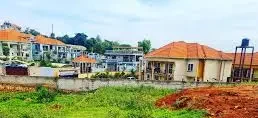
There is a particular type of neighbourhood that serious property investors learn to recognise: one that has moved past the speculative phase, where the fundamentals are visible and verifiable, but where prices have not yet caught up fully with what the area actually delivers. Kiwatule is that neighbourhood in Kampala’s northeastern corridor right now. It is not undiscovered — professionals, developers, and diaspora investors have been active here for years — but it continues to offer a combination of accessibility, tenant quality, rental demand, and land value that few areas in Greater Kampala can match at comparable price points.
This guide goes beyond the surface. It covers Kiwatule’s geography and what makes its location work, the full spectrum of property types and what each costs to buy or rent, the investment return profile for apartment block developers, commercial property opportunities, how Kiwatule compares to its neighbours, and the risks that any honest assessment of the market must include. If you are considering buying land, purchasing a completed property, developing a rental block, or simply finding a home to rent in Kiwatule, this is the guide that gives you the full picture.
Looking For Our Services?
Choose your option below:
Where Kiwatule Sits and Why the Location Works
Kiwatule occupies a position in Nakawa Division, approximately 8 to 10 kilometres northeast of Kampala’s Central Business District. It borders Ntinda and Naguru to the west, Naalya to the north, Kyambogo to the south, and Kireka to the east. That central position within the northeastern corridor is not accidental — it is the primary reason for Kiwatule’s sustained demand. The neighbourhood sits at the intersection of multiple access routes that connect it efficiently to virtually every major employment and commercial node in Greater Kampala.
The Kiwatule Road connects directly toward Ntinda and the inner city. The Kyambogo Road gives access southward toward Kyambogo University, the industrial areas of Banda and Nakawa, and the Jinja Road corridor. The Northern Bypass — accessible within a short drive through Kireka — opens east–west movement across Kampala’s northern suburbs without requiring passage through the city centre. For a resident in Kiwatule, Bweyogerere’s industrial belt, Naalya’s commercial strip, Kira’s growing town, and Kampala’s CBD are all within 20 to 45 minutes under normal traffic conditions.
That commute profile — multiple destinations accessible in reasonable time — is what makes Kiwatule work for the professional tenant base that drives its rental market. Tenants here are not choosing the neighbourhood despite its location; they are choosing it because of it. And that demand is structural, not cyclical. As long as Kampala’s employment base continues to be distributed across the northeastern and northern corridor — which all evidence suggests it will — Kiwatule’s locational advantage remains intact.
How Kiwatule Developed Into What It Is Today
Kiwatule’s transformation from a quiet residential extension of Ntinda into one of Kampala’s most actively traded property markets happened over roughly a decade, driven by a combination of demographic pressure and market logic. As Ntinda and Naguru became unaffordable for the professional middle class — land prices in those areas rising steeply through the 2010s — the demand that could no longer be absorbed there flowed outward. Kiwatule, with its good road access and proximity to the same amenities, was the natural recipient.
The first wave was individual home builders: professionals who bought plots and constructed their own homes, establishing the residential character that would attract the tenant market. The second wave was rental developers — investors who recognised the tenant profile arriving in the area and built apartment blocks and rental houses to serve it. The third wave, which is ongoing, is the commercial layer: the schools, clinics, supermarkets, restaurants, and professional services that follow residential density and in turn make the neighbourhood more attractive to the next generation of residents.
Kiwatule is now firmly in that third phase. The amenity base is well-established. Multiple schools — including international and semi-international institutions — are accessible from the area. Retail and dining options have improved materially. The neighbourhood has its own commercial gravity. That maturity is a signal of stability for investors: Kiwatule is not a bet on future development, it is an investment in a market that has already proven its demand thesis.
Land in Kiwatule: Prices, Tiers, and What You Get
Land in Kiwatule is tiered by road access and location within the neighbourhood — specifically by whether a plot has tarmac frontage, sits on a well-maintained murram road, or is set back on a secondary access road. That distinction drives more of the price difference than plot size alone, because rental performance and resale demand are both significantly shaped by access road quality.
Prime tarmac-fronted plots on the main Kiwatule Road, Kyambogo Road, and other tarmac-surfaced arteries within the neighbourhood price from $75,000 to $200,000 for plots of 19 to 25 decimals. These are the highest-demand plots for both residential development and commercial or mixed-use investment. Visibility, parking access, and road quality at this tier support premium rental and sales outcomes. We have active listings in this bracket — our 19-decimal plot along Kyambogo Road and our 25-decimal residential and commercial plot in Kiwatule are examples of what is available in this tier.
Standard residential plots of 12 to 15 decimals (the 50×100ft format), with good access but not necessarily tarmac frontage, price between $45,000 and $80,000 depending on exact location and title clarity. These are the primary entry point for individual home builders and investors planning smaller rental developments of 2 to 4 units.
Larger development plots of 40 decimals and above — suitable for apartment blocks of 10 or more units or mixed-use commercial-residential projects — are increasingly scarce in Kiwatule as the neighbourhood fills in. When available, they price from $150,000 to $350,000 depending on size, access, and title. Our 20-unit apartment block on 55 decimals of fully titled land is an illustration of what larger-scale development in Kiwatule looks like — a completed income-generating investment rather than raw land, but on a plot that captures this tier’s scale.
Land in Kiwatule has appreciated consistently. Buyers who entered the market five years ago at $30,000 to $50,000 for a 25-decimal plot are now holding assets valued at $75,000 to $120,000 in comparable locations. That appreciation trajectory is moderating as prices mature — which is normal for a neighbourhood at this stage — but the underlying demand that supports current values remains intact.
Apartment Blocks in Kiwatule: The Investment Case
Of all the property types in Kiwatule, apartment blocks represent the most compelling investment case for yield-focused buyers. The neighbourhood’s professional tenant base, strong rental demand, and relatively lower land costs compared to Ntinda and Naguru combine to produce gross yields that are difficult to replicate in more central markets.
The anchor of this case is our current listing: a 20-unit apartment block for sale in Kiwatule — 10 units of 3-bedroom apartments and 10 units of 2-bedroom apartments, on 55 decimals of fully titled land. This is a substantial, income-generating investment. Each unit includes bathrooms, a sitting and dining area, a kitchen with wardrobes, and full fixtures — the finish standard that commands consistent occupancy in Kiwatule’s market.
At current Kiwatule rental rates for well-finished units — $280 to $420 per month for 2-bedroom apartments and $400 to $600 per month for 3-bedroom apartments — a 20-unit block at average occupancy generates gross monthly income of $6,800 to $10,200, or $81,600 to $122,400 annually. That is meaningful income from a single asset, with the added security of a diversified unit base that absorbs individual vacancies without significantly impacting overall cash flow.
For investors building new apartment blocks rather than buying completed ones, the economics require modelling from the ground up. On a 25-decimal plot:
A 6-unit block (two-bedroom units), quality construction with borehole, generator infrastructure, and perimeter wall, costs approximately $70,000 to $130,000 in construction, plus land at $60,000 to $90,000 for a well-located plot — total investment of $150,000 to $220,000. At $320 per unit per month, gross monthly income is $1,920, or $23,040 annually. Gross yield: approximately 10 to 15 percent at the lower total investment range. That is a strong, defensible return for a professionally managed asset in an established market.
An 8-unit block on a larger plot (30 to 35 decimals), mixing 2- and 3-bedroom units, involves total investment of $200,000 to $350,000 and can generate $2,800 to $4,000 per month in gross rental income. At these numbers, gross yields of 12 to 17 percent are achievable for investors who buy land at current prices and build to quality standards.
These yields are gross — before management costs, maintenance provisions, and vacancy periods. Net yields will be lower. But the headroom is real. Investors who cut corners on construction quality to reduce initial costs typically find that the savings are recovered by vacancies and maintenance costs within 2 to 3 years, while quality-built units maintain occupancy and command rent premiums throughout their lifecycle.
Looking For Our Services?
Choose your option below:
Rental Apartments in Kiwatule: What Tenants Pay and What They Get
Kiwatule’s rental apartment market is one of the most active in the northeastern corridor. The demand is consistent, the tenant base is stable, and the range of available units covers multiple budget levels. For tenants evaluating the area, here is what the market currently looks like:
One-bedroom self-contained apartments in well-finished Kiwatule blocks rent from $160 to $260 per month. These attract single professionals, young couples, and students at nearby institutions. At the upper end of this range, expect quality finishes, reliable water, and a secure compound.
Two-bedroom apartments are the most actively traded rental category in the area, consistent with Greater Kampala’s overall rental demand pattern. Monthly rents range from $280 to $420 for standard to good-finish units, and up to $550 for premium units in blocks with generator backup, borehole water, quality fittings, and covered parking. Vacancy periods for well-managed two-bedroom units in Kiwatule rarely exceed six weeks in any given year.
Three-bedroom apartments rent from $400 to $650 per month depending on finish, block quality, and amenities. These attract family tenants — professionals with children who want apartment security and managed environments rather than a standalone rental house.
The key differentiator between units at similar price points is utility reliability. Apartments with borehole water systems and generator or solar backup consistently outperform NWSC-only, grid-only units in occupancy and rental rate. Tenants in Kiwatule’s professional demographic are willing to pay a premium of $30 to $80 per month for the assurance that water will run and power will be available after outages. Investors who build utility resilience into their projects from the outset recover that cost within the first year through rental premiums and reduced vacancy.
We have apartments for rent in Kiwatule. Contact our team to discuss currently available units, arrange viewings, and find a unit that matches your budget and requirements.
Standalone Houses in Kiwatule: For Sale and For Rent
Alongside its apartment market, Kiwatule has a well-established market in standalone residential homes — both for purchase and for rent. These are properties on individual plots that sit independently, typically with perimeter walls, compound space, and greater privacy than apartment living provides.
For buyers, standalone homes in Kiwatule price across a broad range depending on size, plot area, finish quality, and location within the neighbourhood. Three-bedroom homes on 12 to 15-decimal plots typically price between $95,000 and $160,000. Four-bedroom homes on larger plots range from $150,000 to $240,000. At the upper end of the market, well-finished 5- and 6-bedroom homes on 25-plus decimal plots command $220,000 to $380,000 — properties that compete with the inner suburbs on quality while offering the space and value profile of the outer corridor.
For tenants, standalone rental houses in Kiwatule range from modest 3-bedroom properties at $350 to $550 per month to large, well-appointed 5- and 6-bedroom homes at the upper end of the market. Our 6-bedroom standalone house for rent in Kiwatule — featuring 6 bathrooms, a modern kitchen, a spacious sitting and dining area, and a large compound with ample parking — illustrates the quality of standalone rental stock available in the neighbourhood. Properties of this scale attract senior executives, diplomatic households, and families that need genuine space and are willing to pay for it.
The standalone rental market in Kiwatule benefits from the same structural driver as the apartment market: consistent inflow of professional and family tenants who want northeastern corridor living at a price point below what Ntinda and Naguru demand. Well-maintained, well-located standalone homes in Kiwatule experience low turnover and strong tenant loyalty — once a family is settled in a good property in a good location, the incentive to move is low unless circumstances change significantly.
We have standalone houses for both sale and rent in Kiwatule. Reach out to our team to discuss what is currently available and to arrange viewings.
Commercial Property in Kiwatule: A Growing Opportunity
Kiwatule’s growing residential density has created a parallel commercial property market that is increasingly attractive to investors thinking beyond pure residential development. The main roads — Kiwatule Road, Kyambogo Road, and the key intersections within the neighbourhood — have evolved into neighbourhood commercial corridors where retail, food and beverage, professional services, and health facilities cluster at high occupancy.
Commercial plots along these corridors price from $85,000 to $160,000 for 19 to 25-decimal plots with tarmac frontage. The development model that produces the strongest returns on these plots is mixed-use: ground-floor commercial units with upper-floor residential apartments. This model maximises income per square metre, serves the neighbourhood’s dual demand for retail and housing, and spreads investment risk across two income streams.
Ground-floor commercial units in well-positioned Kiwatule blocks rent from $200 to $500 per month depending on size and visibility. A row of four commercial units at $300 per unit per month generates $1,200 monthly from the commercial element alone — a meaningful addition to the residential rental income from upper floors. For investors who want to maximise return per plot without sacrificing residential income, the mixed-use model in Kiwatule’s commercial corridors is hard to beat.
We have commercial and mixed-use land listings in Kiwatule, including plots along Kyambogo Road. Contact our team to discuss commercial development opportunities and how the economics work for your specific budget and investment mandate.
The Tenant Profile: Who Lives in Kiwatule and Why It Matters
Understanding who rents in Kiwatule is as important as understanding what the rent levels are, because tenant quality shapes vacancy risk, payment reliability, and the type of property that performs best.
Employed professionals are the dominant segment — teachers, engineers, accountants, healthcare workers, NGO staff, and business owners in their late 20s to early 40s. They are typically salaried or have stable business income, they stay in well-maintained units for multiple years, and they choose Kiwatule specifically because it gives them access to the northeastern corridor’s employment nodes at a rent level below what Ntinda would demand for comparable space.
Young families represent the second major segment. Couples with children who want a quiet, residential neighbourhood with good school access, reliable services, and community feel. These tenants prioritise space and stability over proximity to the city centre, and they tend to be among the most reliable long-term tenants in any neighbourhood.
International and regional tenants — East African professionals, NGO workers, and diplomatic household staff — are an increasingly visible segment in Kiwatule’s upper-end standalone and large-apartment market. These tenants bring institutional payment structures, longer tenancy durations, and demand for higher-specification units.
Diaspora buyers and investors are also active in Kiwatule — not as tenants but as property owners developing rental assets from abroad. For Ugandans in the UK, USA, Canada, and the Gulf who want to invest at home, Kiwatule’s legible market and established demand base make it one of the more straightforward areas to evaluate and enter remotely. Our complete guide for diaspora investors explains how to navigate remote purchasing and development in Uganda’s real estate market.
Looking For Our Services?
Choose your option below:
Sub-Areas Within Kiwatule: Not Every Location Is the Same
Like every neighbourhood of its size, Kiwatule has internal geography that matters for investment outcomes. Buyers who treat the entire area as a single homogeneous market will miss the pricing and performance differences between sub-locations.
The Kiwatule Road corridor: The main road and its immediate surrounding streets form the premium tier of the Kiwatule market. Land prices are highest here, but so is rental demand and occupancy consistency. Investors building apartment blocks or mixed-use developments in this zone capture the best of the area’s tenant profile — high-income professionals who want tarmac access and proximity to the main road’s commercial services.
Kyambogo Road frontage: The southern edge of Kiwatule along Kyambogo Road carries strong commercial energy alongside its residential character. Plots here attract mixed-use developers and commercial investors looking for visibility and vehicle access. Our listings on Kyambogo Road reflect this premium tier.
Interior residential streets: The quieter internal streets — murram-surfaced but increasingly upgraded as residential density grows — offer meaningfully lower land prices and a more exclusively residential character. These are appropriate for buyers building family homes or smaller rental units (2 to 4 units) targeting tenants who prioritise quiet living over main-road access. Land here is 20 to 35 percent cheaper than tarmac-fronted plots, which translates into better yield economics for smaller-scale development.
The Kireka interface: The eastern edge of Kiwatule bordering Kireka carries slightly more commercial and light-industrial character. Less preferred for pure residential development, but interesting for investors looking at commercial or mixed-use opportunities who want lower entry costs than the main road corridor.
Our team knows each of these sub-locations in detail. If you are evaluating a specific plot or street within Kiwatule, we can give you an honest assessment of its likely rental performance and resale trajectory relative to its current price. Contact us to discuss.
Building in Kiwatule: Construction Costs and Standards
For investors who are buying land and developing rather than purchasing completed property, understanding construction costs is essential to modelling returns accurately. Kiwatule’s professional tenant base means that construction quality is not optional — it is the primary determinant of whether your units achieve the rental rates and occupancy levels that make the investment worthwhile.
Indicative construction benchmarks for Kiwatule and the surrounding northeastern corridor:
A 3-bedroom standalone home of 130 to 150 square metres, finished to a standard that commands $400 to $550 per month in rent, costs approximately $45,000 to $70,000 to construct. Adding servant quarters, a perimeter wall, and borehole and generator infrastructure adds $8,000 to $15,000 to that figure.
A 4-unit apartment block (two-bedroom units) on a 12 to 15-decimal plot, built to quality standards with all utility infrastructure, costs approximately $70,000 to $100,000 in construction, excluding land. On well-located land costing $55,000 to $75,000, total development investment is $125,000 to $175,000.
A 6 to 8-unit block on a larger plot (25 to 30 decimals), mixing 2- and 3-bedroom units with quality finishes, costs approximately $120,000 to $180,000 in construction. Combined with land costs, total investment typically ranges from $195,000 to $300,000. At current Kiwatule rental rates for well-finished units, this scale of development produces gross monthly income of $2,200 to $4,000 per month, depending on unit mix and occupancy.
Our construction team is active in Kiwatule and across the northeastern Kampala corridor. We design, build, and hand over completed properties — and we remain available after handover for maintenance, renovation, and improvement work. Our Home Construction and Improvement Services page covers the full range of what we build and how we work, and our construction process guide walks through every stage from initial design to project completion.
Kiwatule vs. Its Neighbours: A Clear-Eyed Comparison
Buyers evaluating Kiwatule are almost always also looking at one or more neighbouring areas. Here is how the comparison holds up honestly.
Kiwatule vs. Ntinda and Naguru: Ntinda and Naguru are the older, more expensive, more prestigious inner-suburb neighbours to the west. Land in Ntinda costs 40 to 70 percent more than comparable plots in Kiwatule. Rental rates are higher, but not proportionately — meaning yields in Ntinda are actually lower than in Kiwatule for equivalent development quality. For investors prioritising yield over prestige, Kiwatule wins this comparison clearly.
Kiwatule vs. Kyanja: These two areas are genuinely comparable in character, tenant profile, and market maturity. Kyanja sits slightly further north and has a marginally more established premium residential identity; Kiwatule sits more centrally within the northeastern corridor. Land prices are similar; rental rates are similar. The choice between them often comes down to specific plot availability and personal familiarity rather than a fundamental investment quality difference. Our Kyanja Real Estate Guide covers that area in the same depth as this guide, for buyers who want a side-by-side evaluation.
Kiwatule vs. Naalya: Naalya is Kiwatule’s immediate neighbour to the north and shares much of its character. Naalya has slightly more commercial density and a busier main-road feel. Kiwatule has a quieter internal residential character. Tenant profiles overlap substantially. For most investors, the decision between Kiwatule and Naalya will be driven by where a specific plot becomes available rather than a strategic preference for one over the other.
Kiwatule vs. Namugongo: Namugongo offers larger plots at lower prices but sits further from Kampala’s core and carries a slightly longer commute. For investors who want yield and are comfortable with a more affordable tenant profile, Namugongo is a compelling alternative. For those who want the professional tenant market and proven rental rates that come with northeastern corridor proximity, Kiwatule remains the stronger choice. Our Namugongo Real Estate Guide covers that corridor in full for buyers considering both options.
Kiwatule vs. Kira: Kira is the larger, more commercially developed municipality to the north — a broader market with more depth at the upper end. For investors with larger capital and appetite for a more commercially complex market, Kira is compelling. For those who want the tighter, more predictable residential rental focus of the inner northeastern corridor, Kiwatule is more appropriate. Our Kyanja vs. Kira comparison gives useful context on Kira’s market dynamics.
For a ranking of how Kiwatule sits relative to the full range of Greater Kampala’s investment neighbourhoods, see our Top 10 Neighbourhoods to Buy Land in Greater Kampala.
Looking For Our Services?
Choose your option below:
Financing a Kiwatule Property: Mortgages and What to Know
Buyers who are not purchasing with full cash can access mortgage financing through Uganda’s commercial banking sector. Stanbic Uganda, Housing Finance Bank, Absa Uganda, DFCU Bank, Centenary Bank, and Equity Bank all offer mortgage products that can be used to purchase residential and commercial property in Kiwatule. All properties we list are eligible for mortgage financing provided the title is clean and the buyer meets the relevant institution’s lending criteria.
Our complete mortgage guide covers how the process works in Uganda — which banks to approach, what documentation is required, what deposit and income levels lenders typically look for, and how the timeline from application to disbursement runs. We support buyers through this process and can connect you with lenders whose product profile matches your situation.
Land Tenure in Kiwatule: What Every Buyer Must Verify
Kiwatule’s land sits predominantly on Mailo tenure — the system that governs most of Buganda’s land and that has specific characteristics every buyer must understand before committing. Mailo land can be transacted with a clean, unencumbered title, but it can also carry bibanja occupancy interests — sitting tenants whose rights are recognised under Ugandan law and whose presence can complicate a buyer’s path to full ownership if not properly addressed at the point of sale.
Before signing any sale agreement or making any payment for a plot or property in Kiwatule, buyers should conduct a physical title search at the Uganda Land Registry, engage a qualified conveyancing lawyer, and verify that the plot’s physical boundaries match the title documents. This process is not optional, regardless of how well you know the seller or how attractive the price appears. Our Mailo land guide explains the full tenure framework, and our complete property buyer’s guide walks through the full due diligence process that every buyer should follow before committing to any purchase in Uganda.
Some plots in Kiwatule also carry Freehold title — a simpler, unencumbered ownership structure. Our guide to Freehold land in Uganda explains how this tenure type differs from Mailo and what it means for buyers.
Risks Worth Naming Before You Invest in Kiwatule
No market guide is complete without honest risk disclosure. Kiwatule’s risks are manageable but real.
Rising land prices compressing yields: Kiwatule is no longer an undiscovered market. Land prices have risen materially over the past five years, which means the yield arithmetic for new developments is tighter than it was for investors who entered early. Buyers who overpay for land in expectation of rental income that does not yet exist in the area will find the returns disappointing. Careful land pricing, honest rental rate modelling, and realistic occupancy assumptions are essential.
Peak-hour traffic congestion: The Kiwatule corridor — particularly the Kireka junction and the approaches to the main Kiwatule Road — experiences significant congestion in morning and evening peak hours. This is a known deterrent for some tenants who weight commuting convenience heavily. It is a structural constraint rather than a solvable problem, and investors should be honest with themselves about how it affects the tenant pool for a specific location within the neighbourhood.
Title due diligence gaps: As noted above, Mailo land tenure requires careful verification. Buyers who skip or shortcut this process expose themselves to ownership disputes that can be expensive and time-consuming to resolve. The cost of proper due diligence is a fraction of the potential cost of getting it wrong.
Construction quality variance: Kiwatule’s attractiveness has drawn in builders of widely varying quality. Buyers purchasing completed properties should insist on structural inspection by a qualified engineer. Investors commissioning new construction should work with a team that has a demonstrable track record in the northeastern corridor. Ask us for references and examples from projects our construction team has completed in and around Kiwatule.
How to Work With Mbogo Real Estate Core International in Kiwatule
We are active in Kiwatule across every category covered in this guide — land sales, completed property sales, apartment block investment, standalone house sales and rentals, and construction and development. Most of the residential properties we list in Kiwatule were built by our own construction team, which means we know the build quality, title history, and site conditions from direct experience.
If you are a buyer, we can show you current land and property listings in Kiwatule, arrange site visits, support due diligence, and guide the transaction through to completion. If you are an investor planning to develop, we can identify the right land, design the right product for the local tenant profile, manage construction, and transition to rental management. If you own property in Kiwatule and are considering a sale, we can assess it and connect you with our active buyer network — provided the title is clean and free of disputes. For tenants, we have units at multiple price points across the neighbourhood — apartments and standalone houses.
The starting point is a conversation. Contact our team here, or learn more about how we work with sellers, developers, and property owners on our partnership and collaboration page.
The Summary Case for Kiwatule
Kiwatule is a proven market. Its fundamentals — location, tenant quality, rental demand, amenity base, and road connectivity — are established and visible. It is not an emerging area where you are betting on future growth; it is a mature residential market where you are investing in demand that already exists and is unlikely to reverse.
The investment case differs by property type. For land buyers, the appreciation story is moderating but still positive. For apartment block developers, the yield arithmetic remains compelling at current land prices provided construction quality is maintained. For standalone home buyers, the market offers good value relative to the inner suburbs for comparable quality. For tenants, Kiwatule offers one of the best combinations of commute access, neighbourhood quality, and rental value in the entire northeastern corridor.
The window for the most dramatic early-stage returns in Kiwatule has passed — but the window for disciplined, quality-focused investment that produces reliable yields and steady capital growth remains open. That is the kind of market that rewards serious investors who do their homework, price accurately, and build to a standard. We are here to help you do exactly that. Get in touch with our team today.
Looking For Our Services?
Choose your option below:
Leave a Reply