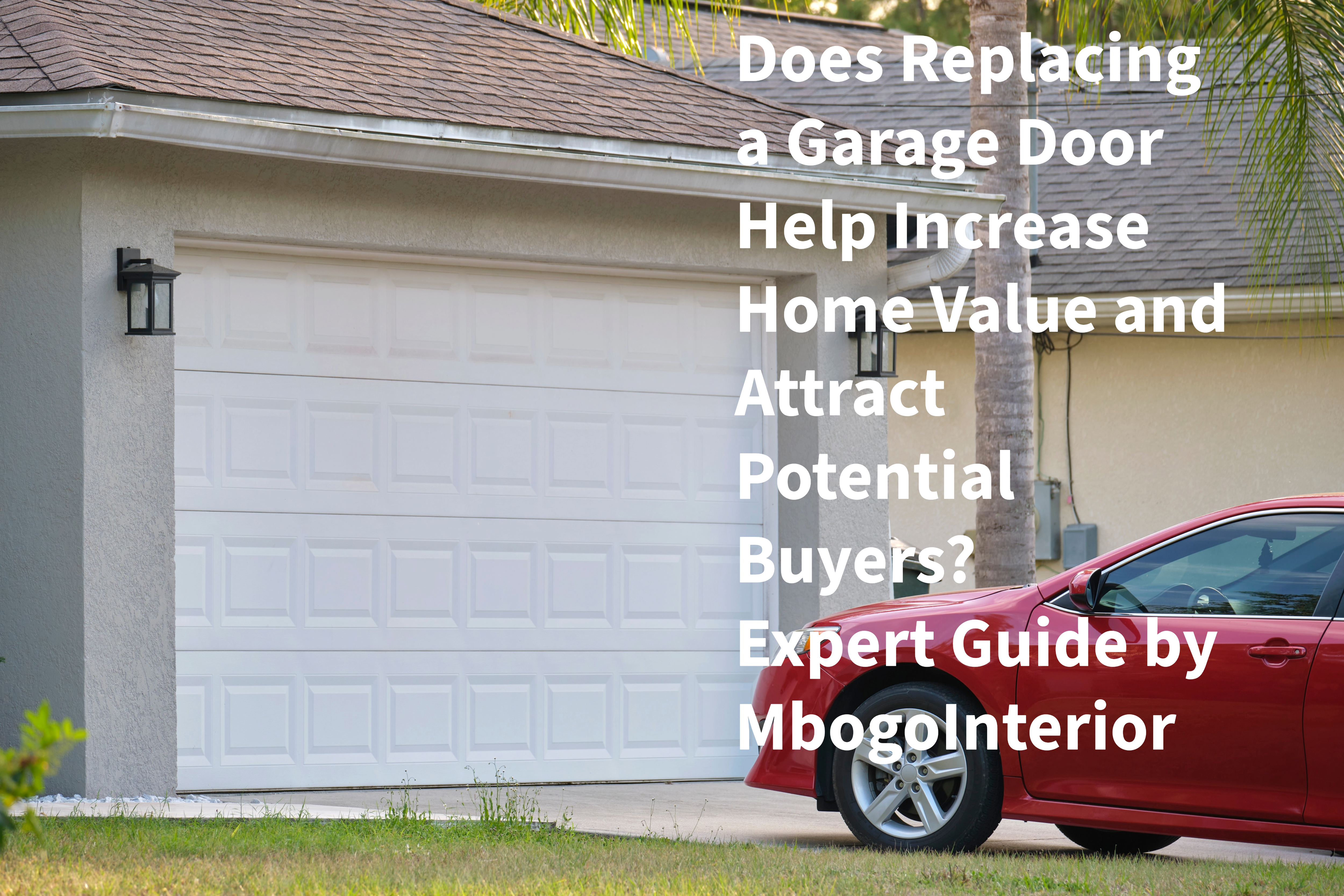
The garage door is one of the first things a prospective buyer sees when approaching a property. In many homes it occupies a significant portion of the entire frontage — in some designs, it is the dominant visual element of the façade. Before a buyer has opened the front door, before they have assessed the garden, before they have looked at the windows or the roof, they have already registered the state of the garage door and formed an impression based on it. That impression colours everything that follows.
A rusted, warped, or poorly fitting garage door communicates two things simultaneously: that vehicle security is compromised, and that routine maintenance has been deferred. A solid, well-finished, properly functioning door communicates the opposite. This guide examines garage door replacement as a property investment: what buyers notice and why it matters, what the different door types offer, when replacement is justified, and what the financial return looks like.
What Buyers Actually Notice at the Garage
Security credibility. For buyers with vehicles — which is the majority of mid-market and above residential buyers — the garage door is a security assessment, not an aesthetic one. A door that does not close and lock securely means vehicle storage is effectively unsecured. Buyers who identify this problem during a viewing either discount the property significantly to account for the cost of replacement, or they walk away entirely if security is a primary concern. There is no version of this where the buyer simply accepts the situation and pays full price.
The maintenance signal. The garage door is often the exterior element that deteriorates most visibly over time. Rust spreads, paint peels, panels dent and warp, the opening mechanism fails. Buyers who see a deteriorated garage door make an immediate inference: if the landlord or seller has allowed this highly visible element to reach this state, what is the condition of the elements that are less visible? The garage door becomes a proxy for the general maintenance standard of the entire property. This inference may be unfair — the rest of the property may be in excellent condition — but it is the inference buyers make, and sellers need to understand it.
Visual coherence. A property with fresh exterior paint, a landscaped garden, and a well-maintained driveway that has a rusted or mismatched garage door looks unfinished. The inconsistency between a well-presented property and a neglected garage door is more jarring than a uniformly average presentation would be. Pre-sale improvement programmes that address everything except the garage door are common and counterproductive — the door’s poor condition undermines the investment in everything around it.
Types of Garage Doors: What Works and When
The choice of garage door type should be driven by the property’s configuration, the target buyer profile, and the budget available. Each type has distinct functional and visual characteristics that make it more or less appropriate for specific applications.
Steel roller doors. Roll upward into a compact overhead coil when opened, requiring minimal clearance above the opening. The compact coil mechanism means they work well in garages with low ceilings or where maximising interior headroom is important. Available in manual (spring-assisted pull) and motorised versions. Steel roller doors provide good security through their steel gauge and the inherent rigidity of the closed roller curtain, and they are lower maintenance than timber alternatives because they do not require periodic painting or sealing. They are the most common and cost-effective garage door type in most residential markets. Their visual limitation is that the corrugated steel appearance reads as functional rather than premium — appropriate for mid-market properties but potentially mismatched with premium architectural finishes.
Steel panel sectional doors. Hinge in horizontal sections that fold upward along a track system as the door opens, lying parallel to the ceiling when fully open. Panel sectional doors provide better insulation than single-skin roller doors (the panel depth allows for insulated cores in the panels), are available in a wide range of finishes including wood-look embossed patterns, and present a more architecturally resolved appearance at the property frontage. Motorised versions with remote operation are the standard specification in premium-market applications. These are appropriate for mid-to-upper market properties where visual quality and insulation performance are both priorities.
Motorised swing or sliding gates with vehicle access. For properties where the garage or car park is accessed through the main compound via a gate rather than through a dedicated garage structure, the relevant replacement consideration is the gate rather than the garage door itself. Motorised sliding gates or motorised swing gates with remote operation add convenience and a quality signal that buyers at the mid-market and above have come to expect. A manual compound gate that requires the driver to exit the vehicle to open it, particularly in rain, is a daily inconvenience that buyers factor into their overall assessment of the property’s livability.
Timber-framed and timber-clad doors. Present well when properly maintained and are appropriate for properties with traditional or period architectural character where a steel door would look incongruous. Their maintenance requirement is the primary limitation for sellers and landlords: timber doors require periodic painting or staining and sealing to prevent moisture penetration and warping. A timber garage door that has been adequately maintained is attractive and appropriate. One that has been allowed to deteriorate — peeling paint, warped panels, swollen frames — is in worse visible condition than an equivalent-age steel door in the same state of neglect, because the deterioration pattern of timber is more visible and more clearly communicates moisture damage and neglect.
Motorisation: When Is It Worth Adding?
Motorised garage door operation — opening and closing via remote control from the vehicle — is an increasingly standard expectation in mid-market and above residential properties. The convenience benefit is real and daily: in rain, at night, when arriving home with shopping or children, the ability to open the garage without exiting the vehicle is a genuine quality-of-life improvement that buyers and tenants appreciate and will pay a modest premium for.
For sellers preparing a property with an existing manual garage door in good structural condition, adding a motorised operator to the existing door is often the most cost-effective intervention — it achieves the convenience and quality signal of motorised operation without the cost of full door replacement. A motorised operator for an existing roller or sectional door can be installed for $200–$600 depending on the door weight and operator specification. For properties where the door itself needs replacement, specifying a motorised operator from the outset costs marginally more than a manual installation and permanently upgrades the property’s daily convenience.
The Return on Investment: How Garage Door Replacement Pays
Garage door replacement sits in an interesting position in the property improvement hierarchy. It is not a high-glamour improvement — it does not create the kind of viewing experience that a renovated bathroom or a freshly painted interior creates. But it prevents a specific and reliably expensive problem: the buyer price reduction request that is generated when a buyer identifies a garage door that clearly needs replacement.
A buyer who identifies a garage door requiring replacement during a viewing will typically either request a price reduction of $800–$2,500 (representing their estimated replacement cost with a contingency margin), or they will use the deficiency as additional leverage in a broader negotiation that achieves a combined reduction significantly larger than the door replacement cost alone. In either case, the seller ends up funding the replacement implicitly through a price reduction that is typically larger than the direct replacement cost would have been.
For rental properties, a deteriorated garage door affects tenant selection decisions — tenants with vehicles will prefer a comparable property with a secure, functional garage door — and affects tenant retention, since a garage door that fails during a tenancy becomes a maintenance complaint and a source of tenant dissatisfaction that contributes to non-renewal decisions.
Indicative cost ranges for garage door replacement (supply and installation, costs vary by market and specification):
- Standard steel roller door, manual (supply and install): $400–$900
- Standard steel roller door, motorised (supply and install): $700–$1,500
- Steel panel sectional door, motorised (supply and install): $1,200–$3,000
- Motorised operator added to existing functional door: $200–$600
Against a property valued at $150,000 or more, these costs represent well under 1% of the property value and consistently prevent price reduction requests that exceed the replacement cost.
Garage Door Replacement in the Broader Pre-Sale Programme
Garage door replacement should be assessed as part of a comprehensive exterior improvement programme rather than in isolation. The garage door’s improvement delivers its maximum impact when the rest of the exterior — driveway, garden, perimeter wall or fence, exterior paint — is also in good condition. A new garage door on a property with a deteriorated exterior creates the same internal inconsistency problem in reverse. The improvement priority for a pre-sale programme should address all visible exterior elements to a consistent standard.
For the exterior painting that creates the backdrop for a garage door improvement, see our guide on repainting your home to increase value. For the landscaping and driveway elements that complete the exterior presentation, see our guides on landscaping upgrades and paver repair.
Our Door and Gate Installation Services
Garage door and compound gate installation and replacement are part of our Home Construction and Improvement Services. We supply and install steel roller doors, panel sectional doors, and motorised gate systems for residential and commercial properties. All installations include proper frame fitting, track alignment, locking mechanism installation, and full operational testing before handover.
We assess the existing door or gate situation before recommending a replacement approach — in some cases, repair and motorisation of an existing functional door is more cost-effective than full replacement. Contact us to arrange a site assessment and quotation for your garage door or gate requirements.
Selling a property and want an honest assessment of which exterior improvements will deliver the best return before listing? We provide pre-sale property assessments that prioritise improvements by their impact on buyer perception and negotiating outcomes. A deteriorated garage door is one of the most common and most avoidable sources of buyer price reduction requests. Contact us to discuss your pre-sale preparation.
Leave a Reply