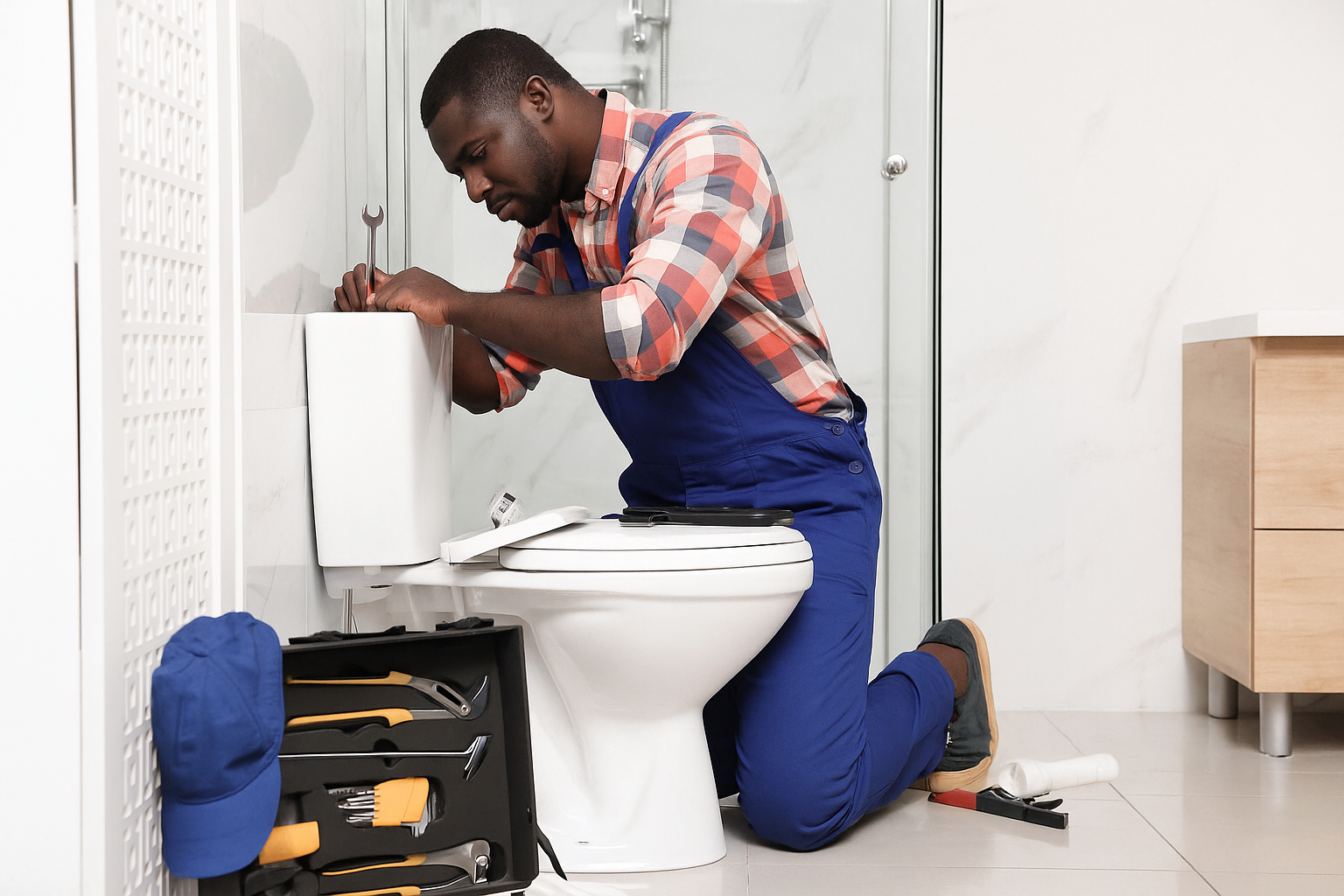
Water efficiency is a practical financial concern for homeowners and tenants in any market where water supply is metered, where supply is intermittent, or where supplementary water sources such as storage tanks, boreholes, or purchased water deliveries add a per-litre cost on top of the municipal supply. In these contexts — which describe the water situation in a very large proportion of the world’s residential property markets — the toilet is the single largest consumer of household water, accounting for 30–40% of total water use in a typical household. A toilet that uses 9–13 litres per flush when a modern equivalent uses 3–6 litres is wasting 40–60% of the water its household consumes for flushing — a waste that translates directly into higher water bills, higher supplementary water costs, and reduced yield from private water supplies during dry periods.
This guide examines low-flow and dual-flush toilet installation as a property improvement: the water efficiency case, the buyer and tenant perception impact, what the different intervention options involve and cost, and how toilet condition fits into the broader bathroom upgrade context.
The Water Efficiency Case: Why Toilets Matter More Than Any Other Fixture
Of all the water-consuming fixtures in a residential property, the toilet has by far the greatest potential for efficiency improvement because it consumes a disproportionate share of total household water use and because the technology for dramatic efficiency improvement (the dual-flush cistern) is mature, inexpensive, and widely available.
A standard single-flush toilet cistern installed in residential properties built over the past three to four decades typically has a flush volume of 9 to 13 litres. A modern dual-flush cistern provides a short flush option of 3 litres for liquid waste and a full flush of 6 litres for solid waste. For a household of four people flushing an average of five times per person per day, this usage pattern typically breaks down as approximately 60% short flushes and 40% full flushes. On this basis, a household using a 9-litre single-flush cistern uses 180 litres per day in flushing. The same household using a dual-flush cistern uses approximately 84 litres per day — a reduction of 96 litres per day, or 2,880 litres per month.
At typical municipal water rates, this saving generates a measurable reduction in monthly water bills. For households with private boreholes or wells, the reduction in draw extends the effective yield of the supply during dry seasons, reducing the risk of supply shortage that forces expensive supplementary water purchases. For properties on purchased water deliveries, the saving is proportional to the per-litre cost of purchased water, which is typically three to ten times higher than municipal metered rates.
How Toilet Condition and Specification Affect Buyer and Tenant Perception
Beyond the water efficiency argument, toilet condition has a direct and immediately observable impact on buyer and tenant perception during property viewings. The bathroom is the room that prospective buyers and tenants inspect most carefully, and within the bathroom, the toilet is the element that most directly signals the property’s maintenance standard and the landlord’s or seller’s investment in quality.
A modern, clean dual-flush toilet with an intact cistern, a quality seat, and chrome fittings in good condition creates an immediate positive impression: the bathroom is functional, modern, and maintained. An old single-flush toilet with a running cistern (audible throughout the viewing), a cracked or stained seat, corroded fittings, and limescale deposits on the bowl and cistern exterior creates an equally immediate negative impression that is very difficult to overcome with any other positive element of the property.
The running toilet — a cistern that continues to run water into the bowl after a flush because the fill valve or flapper valve has failed — deserves particular attention. This is one of the most common maintenance failures in residential rental properties and one of the most damaging to landlord reputation. A running toilet is audible to anyone in the bathroom and often audible in adjacent rooms. It signals unequivocally that the landlord has not visited or maintained the property recently, since any maintenance inspection would have identified and corrected this fault. Its presence during a viewing tells the prospective tenant that this is a property where maintenance problems are allowed to persist. This message, once received, shapes every subsequent assessment of the property.
For properties in the mid-market and above, the expectation of modern plumbing fixtures — including a properly functioning dual-flush toilet — is a baseline quality standard, not a premium feature. A property marketed at competitive mid-market pricing with an outdated single-flush toilet in poor condition is presenting an internal inconsistency that buyers and tenants will notice and use as a basis for negotiated price reductions.
What a Toilet Upgrade Involves: Options and Cost
Toilet upgrades exist on a spectrum from the smallest and cheapest intervention to a full replacement. The correct level of intervention depends on the condition and specification of the existing toilet, the property’s market position, and the nature of the deficiencies present.
Seat replacement only. For toilets that are functionally sound — the cistern fills and empties correctly, the bowl is clean, the fittings are in good condition — but which have a cracked, stained, or broken seat, seat replacement is the appropriate intervention. A quality toilet seat with soft-close mechanism costs $25–$60 supply and install, depending on the seat size and specification. A soft-close seat is strongly recommended for rental properties: the slam of a conventional seat is a common source of neighbour and other occupant complaint in apartment buildings, and the soft-close mechanism is more durable under the rough use that rental properties experience. The visual impact of a new quality seat on an otherwise acceptable toilet is immediate and significant — this is probably the highest ROI bathroom micro-intervention available.
Cistern replacement or repair. When the toilet pan is in good condition but the cistern is failing — running continuously, filling slowly, leaking at the base, or simply old and inefficient — cistern replacement achieves the full efficiency and functional improvement without the cost and disruption of removing the pan. A replacement dual-flush cistern, supply and installed with appropriate fittings and connection, costs approximately $100–$250 depending on the cistern specification and local labour rates. This intervention upgrades a single-flush toilet to dual-flush specification, eliminates the running water waste, and visually modernises the toilet installation.
Full toilet replacement. When the toilet pan itself is cracked, stained beyond professional cleaning, visually inconsistent with the property’s market positioning, or when the complete installation has reached end of service life, full replacement including pan, cistern, seat, and connecting pipework is the appropriate approach. A mid-quality complete toilet unit — close-coupled, dual-flush, with soft-close seat — costs approximately $150–$450 supply and installed for a standard specification. Premium specifications including concealed cisterns (which require wall boxing but produce a visually clean installation) or wall-hung toilets (which allow floor-level cleaning and look significantly more modern) cost $300–$800 installed and are appropriate for upper-market properties where the additional visual quality is justified by the market expectation.
Connecting pipework and supply valve. Any toilet replacement should include inspection and where necessary replacement of the water supply valve and connecting pipework. These components are frequently corroded or partially functioning in older installations. A new toilet installed on failed pipework will experience the same flow and filling problems that plagued the old installation. The additional cost of valve and pipework replacement is $30–$80 and it ensures the new installation performs correctly from the first use.
Dual-Flush Technology: Understanding the Options
Modern dual-flush cisterns use a different flush mechanism from the traditional single-flush siphon design. Instead of a siphon that must be primed by pulling a lever, dual-flush systems use a valve-based mechanism activated by a push-button or two-button actuator on the top of the cistern. The short flush button releases approximately 3 litres and the full flush button releases approximately 6 litres, with some variation by manufacturer.
The push-button actuator is also more intuitive for users of all ages and abilities, and the two-button format makes the short-flush option the default choice, which most users will select for most flushes simply because it is the easier button to press. This natural usage pattern, rather than any conscious water-saving behaviour, generates the majority of the water saving that dual-flush technology delivers.
The Broader Bathroom Upgrade Context
Toilet replacement delivers its strongest return when it is part of a coordinated bathroom upgrade that addresses all the visible and functional deficiencies in the room simultaneously. A new, modern toilet in a bathroom with mould-embedded grout, cracked floor tiles, a dripping shower fitting, and inadequate ventilation is still a bathroom in poor overall condition. The new toilet is a positive element, but it cannot overcome the negative impression created by the sum of the other deficiencies.
For the complete framework on bathroom renovation as a rental income strategy, see our guide on bathroom renovation for rental income. For the tile component specifically, our post on tile cleaning and regrouting covers how to address grout condition at minimal cost when tile replacement is not required.
Our Plumbing and Sanitary Ware Services
Toilet installation and replacement, cistern replacement and repair, shower fitting installation, and full bathroom plumbing are all part of our Home Construction and Improvement Services. We supply sanitary ware across the full quality range and advise on the specification appropriate for the property’s market position before any purchase is made. All plumbing work is carried out by qualified plumbers with the appropriate pressure and flow testing on completion. Contact us to arrange a plumbing assessment and quotation for your property.
Selling your home and want to know which bathroom upgrades will have the greatest impact on buyer perception and negotiating strength? A running toilet, a cracked seat, or an outdated single-flush cistern are among the easiest deficiencies for a buyer to identify and the easiest to use as a basis for a price reduction request. Addressing them before listing costs a fraction of the concession they would otherwise generate. We advise on pre-sale property improvements and can assess your bathrooms specifically as part of a comprehensive pre-sale preparation programme. Contact us to discuss.
Leave a Reply