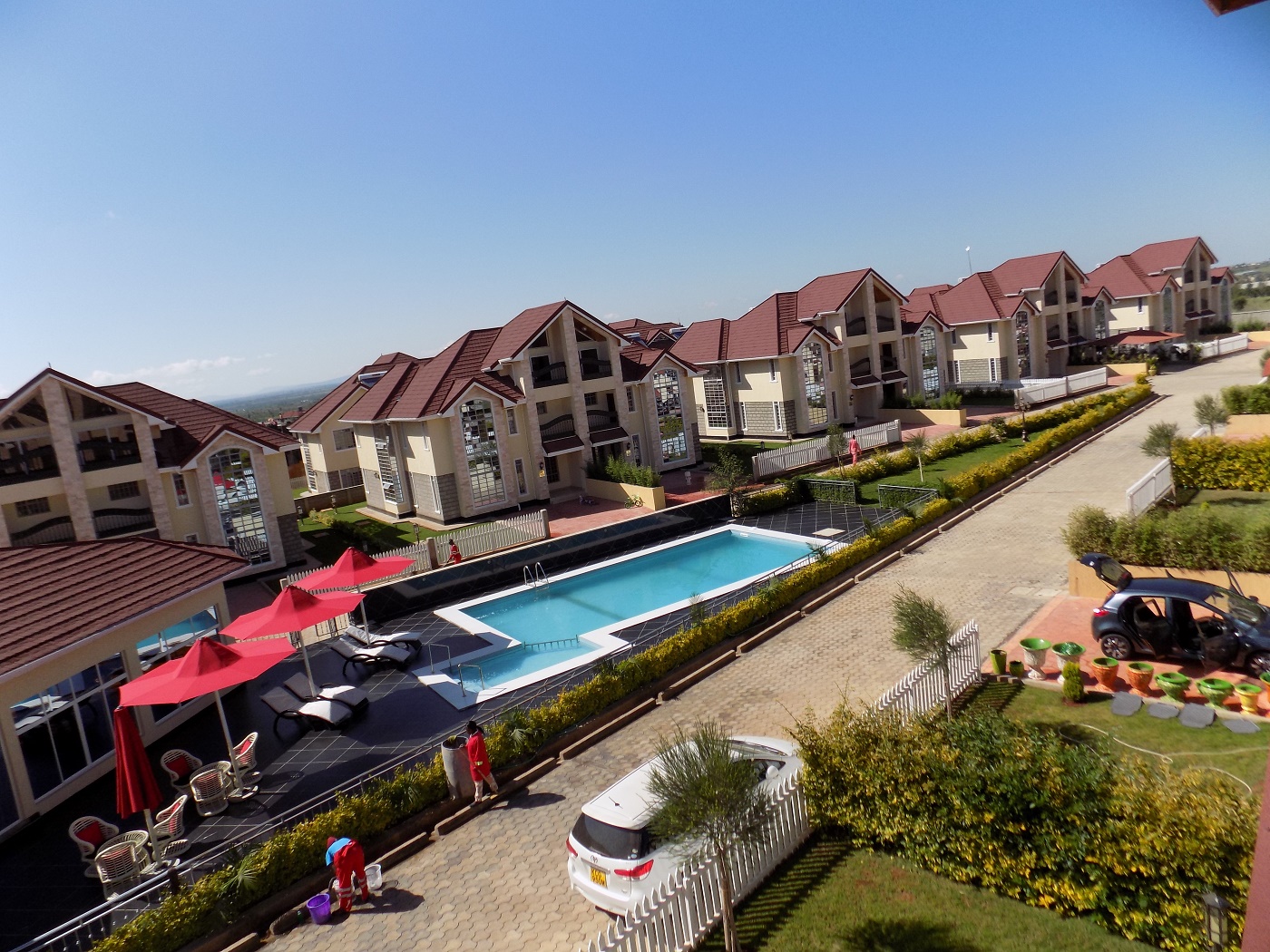
Kitengela, Kenya sits approximately 25 kilometres south of Nairobi’s central business district, beyond the Nairobi National Park boundary, in Kajiado County. A decade ago it was a semi-arid pastoral area known primarily for the Masai communities who grazed cattle across its plains. Today it is one of Kenya’s fastest-growing peri-urban areas — a town of rising housing estates, new schools, active markets, and a population that has expanded dramatically as Nairobi’s middle class has pushed outward along the Nairobi–Athi River–Kitengela corridor.
For Ugandan investors and diaspora buyers looking to diversify beyond Uganda’s borders, Kitengela represents Kenya’s equivalent of what Gayaza or Kira represented to Kampala a decade ago: a growth suburb at the inflection point where land is still accessible but demand is accelerating. This guide examines the case honestly — the opportunity, the risks specific to cross-border investment, and what Ugandan investors need to understand about Kenyan property.
Why Kitengela Has Grown So Fast
Kitengela’s growth is driven by Nairobi’s overflow. The city of roughly four million official residents (significantly more by informal count) has pushed housing demand relentlessly outward. The Standard Gauge Railway (SGR) link, while primarily a freight and long-distance passenger line, has improved connectivity along the Nairobi–Mombasa corridor that passes through Kitengela’s vicinity. The Nairobi Expressway and improved southern bypass roads have made the commute from Kitengela to Nairobi’s southern industrial areas (Industrial Area, Mombasa Road manufacturing corridor) increasingly practical.
The result is a town where residential developments are being built at pace, schools and churches are proliferating, and shopping centres are establishing — the pattern of a suburb reaching critical mass. For property investors, this transition from speculative to established demand is the most productive entry window.
The Investment Case: What Works in Kitengela
Residential plot acquisition. Kitengela’s core opportunity for most investors is straightforward land purchase for residential development. Plots are typically sold in eighth-acre (50x100ft) or quarter-acre configurations by various development companies operating in the area. These plots can be built on immediately for rental income or held for appreciation.
Buy-and-build for rental income. The Nairobi rental market is significantly larger and more liquid than Kampala’s, and Kitengela serves a large working-class and lower-middle-class rental population employed in Nairobi’s industrial and commercial areas. Simple two-bedroom houses rent for KES 8,000–18,000 per month depending on finish and location within Kitengela. Apartment units with better finishes command KES 15,000–30,000.
Land banking. For investors who prefer a passive strategy, holding undeveloped plots in Kitengela and waiting for the surrounding area to develop further is a viable play. Land prices in the area have appreciated substantially over the past five years, and the growth trajectory supports continued appreciation, though at a pace that will eventually moderate as the suburb matures.
Land Prices in Kitengela
Kitengela plot prices vary significantly depending on the specific estate, proximity to tarmac, and developer. As a general guide for 2026:
- 50x100ft (eighth-acre) residential plot in established estates: KES 600,000–1,500,000
- Quarter-acre plots in developed areas: KES 1.5M–3.5M
- Prime plots near the main Kitengela town area: KES 2M–5M+
For Ugandan buyers, these figures translate to approximately UGX 15M–40M for an eighth-acre plot at current exchange rates — accessible entry points by any measure, though conversion costs and cross-border transaction complexity must be factored in.
Critical Risks for Ugandan Investors in Kenya
Cross-border property investment is fundamentally more complex than domestic investment, and Ugandan investors in Kenya need to be clear about the specific risks involved.
Legal jurisdiction. Property in Kenya is governed by Kenyan law, not Ugandan law. Any dispute will be resolved in Kenyan courts, under Kenyan property law. Engaging a Kenya-registered advocate before any purchase is non-negotiable, not optional.
Title verification in Kajiado County. Some land sold in Kitengela and surrounding Kajiado County is on land that was previously community Masai land. The conversion of such land to freehold title has not always been clean, and there is a history of title disputes in this area. Title verification at the Kajiado lands registry, conducted by a qualified Kenyan advocate, is essential before any purchase.
Developer risk. Many Kitengela plots are sold by real estate development companies offering payment plans. Some of these companies are reliable; others have a history of project delays, disputed titles, or in the worst cases, outright fraud. Before buying off-plan or on a payment plan, verify the developer’s track record independently and ensure the specific land being sold has a clean title in the developer’s name before any payment is made.
Currency risk. Ugandan investors earning UGX and buying in KES carry currency exposure. The UGX–KES exchange rate has historically moved in favour of the Kenyan shilling over longer periods, which adds a layer of return risk for shilling-based investors.
Property management from a distance. Managing a property in Kenya from Uganda is logistically challenging. Build costs in Kenya are typically quoted in KES, contractor relationships need local management, and tenant oversight requires either a local property manager (additional cost) or frequent travel.
Kitengela vs. Ugandan Markets: An Honest Comparison
Kitengela’s appeal for Ugandan investors is primarily diversification — exposure to Kenya’s larger, more liquid property market and Nairobi’s economic engine. The domestic Ugandan market, particularly in growing suburbs like Gayaza, Kira, and Kyanja, offers comparable growth dynamics with the significant advantages of domestic legal jurisdiction, no currency risk, and easier property management.
For investors who have already established Uganda positions and are looking to diversify into East Africa’s largest economy, Kitengela is a legitimate option if entered carefully. For first-time investors, Uganda’s domestic market is a more straightforward starting point.
Mbogo Real Estate Core International facilitates property investment across East Africa including Kenya. Contact us to discuss cross-border investment options and to get guidance on how to navigate the Kenyan market from Uganda.
Building or renovating in Uganda while holding Kenya land? Our construction services are available across Uganda. See our Home Construction and Improvement Services for what we offer domestically.
Leave a Reply