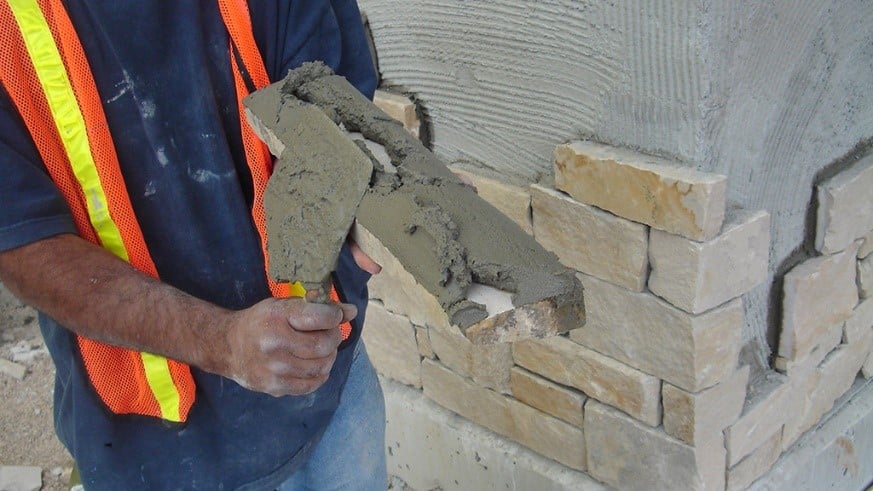
Stone cladding — the application of natural stone, manufactured stone veneer, or stone-textured tiles to exterior or interior wall surfaces — has become a genuinely popular finishing style across Kampala, Wakiso, Mukono, and Entebbe over the past several years, particularly on gate pillars, entrance surrounds, and perimeter walls. It’s a real upgrade that adds durability, texture, and visual distinction to a property when specified and installed correctly — and, just as importantly, a finish that can go visibly wrong when it isn’t, which makes getting the specification and installation right worth understanding before committing to it.
Looking to build or improve your house or rentals?
We offer home construction and improvement services including building, renovation, painting, tiling, plastering, landscaping, kitchen upgrades, and more.
What Stone Cladding Does for a Property in Kampala’s Market
Visual distinction and kerb appeal. Painted plaster is the standard exterior finish on the great majority of residential properties across Kampala, Wakiso, and Entebbe. Stone cladding — even applied partially, on a gate pillar, entrance surround, or feature wall — breaks that uniformity and creates visual texture that photographs well and stands out on a street where every other property is finished in flat painted plaster. In a competitive market where a buyer might view several similar properties in Kyanja, Ntinda, or along Entebbe Road in one afternoon, that visual distinctiveness is a genuine, memorable asset.
Durability and low maintenance. Stone cladding doesn’t need the periodic repainting that plaster does. Natural stone weathers gracefully under Uganda’s sun and rain; quality manufactured stone veneer typically carries a protective coating that holds its appearance for years. For sections of a building that are awkward or costly to repaint regularly — gate pillars, boundary wall pillars, high or hard-to-access feature areas — stone cladding removes that recurring maintenance cost entirely.
Protection of the underlying structure. In areas exposed to rain splash-back — the base of external walls, around ground-floor window and door openings — a real concern given Uganda’s two rainy seasons, stone cladding gives a harder, more water-resistant surface than plaster, and holds up better against the physical knocks a boundary wall or gate pillar takes over the years.
Types of Stone Cladding Available in Uganda
Natural stone — including granite, marble, slate, and locally quarried stone — gives the most authentic look and the greatest long-term durability. Granite is highly weather-resistant and comes in a range of colours; marble, often sourced from Tororo Rock and sold through suppliers across Kampala, gives a premium, distinctive finish but costs considerably more and needs more careful specification for outdoor use. Natural stone is heavier than manufactured alternatives, which matters structurally — the wall or foundation it’s applied to needs to be built, or reinforced, to carry the additional load.
Manufactured stone veneer — a lightweight, cement-based product moulded and coloured to resemble natural stone — is considerably more affordable and much easier to install, since it doesn’t carry the same structural weight concerns as natural stone. Quality manufactured veneer, properly installed, gives a very convincing stone appearance at a fraction of the cost, and is the more practical choice for most mid-market properties across Kampala, Wakiso, and Mukono.
Stone-effect tiles are the most affordable route to a stone look, particularly for interior feature walls, and are widely available through the same suppliers who stock floor and wall tiles across Kampala.
Looking to build or improve your house or rentals?
We offer home construction and improvement services including building, renovation, painting, tiling, plastering, landscaping, kitchen upgrades, and more.
Where to Apply Stone Cladding for Maximum Return
Full exterior stone cladding across an entire building is really only justified on premium properties — around Muyenga, Bugolobi, Kololo, or Lubowa — where the specification cost is proportionate to the asking price. For the great majority of properties across Kampala, Wakiso, and Entebbe, partial cladding delivers a far better return per dollar spent: gate pillars and the entrance surround, the plinth (lower section) of external walls, feature walls at the compound entrance, and living room feature walls inside are the applications that create the most visual impact for the least material cost — and gate pillars specifically are, by a wide margin, the most common and most cost-effective place we install stone cladding across Kampala’s suburbs.
Why Installation Quality Matters So Much
Stone cladding has a real reputation in Uganda for going wrong when it’s installed by someone without the right experience, and it’s worth taking seriously before committing to it. The most common failures we see on jobs we’re called in to fix: stone applied without accounting for the extra weight it adds to a wall or pillar, leading to cracking or even partial collapse over time; poor adhesive coverage leaving sections hollow and prone to falling away; uneven, poorly planned stone placement that looks patched together rather than deliberate; and no proper sealing, which lets water get behind the stone and cause damage that’s hidden until it’s already serious. A properly specified, properly installed job — with the substrate assessed for load capacity, the right adhesive system used, and a proper sealant applied — avoids all of this and gives a genuinely durable, long-lasting finish.
Looking to build or improve your house or rentals?
We offer home construction and improvement services including building, renovation, painting, tiling, plastering, landscaping, kitchen upgrades, and more.
What Stone Cladding Costs in Uganda
- Manufactured stone veneer, supply and installation: $25–$45 per square metre
- Budget natural stone (locally quarried), supply and installation: $35–$55 per square metre
- Premium natural stone (marble and similar, often sourced from Tororo Rock), supply and installation: $70–$110 per square metre
- Stone-effect tile cladding for an interior feature wall, supply and installation: $15–$30 per square metre
For the most common and most cost-effective application — a pair of gate pillars and the entrance surround, typically covering 8–15 square metres in total — a manufactured veneer job typically costs $200–$650, and a natural stone job $300–$1,200 depending on the stone chosen. A living room feature wall of a similar size follows the same broad ranges. These modest costs deliver a genuinely distinctive, durable result relative to what a full exterior repaint or renovation would cost for the same visual impact.
Getting Stone Cladding Done Right
Stone cladding supply and installation — natural stone, manufactured veneer, and stone-effect tile — is part of our Home Construction and Improvement Services, carried out for property owners across Kampala, Wakiso, Mukono, and Entebbe, and further afield in Jinja, Mbarara, Mbale, Gulu, and Masaka. We assess the structure being clad before recommending a material — checking that gate pillars, walls, or feature areas can actually carry the weight of natural stone before specifying it — and we advise on the material and application area that suits a property’s market position rather than defaulting to whatever looks most impressive.
For a seller looking for a feature that makes a property stand out from neighbouring listings in Kampala, Wakiso, or Entebbe, well-executed stone cladding at the gate pillars and entrance is one of the most cost-effective visual differentiators available — provided it’s specified and installed properly from the start.